
Welcome to Gamespublisher.com, your trusted resource for game development and the video game industry. Updated for 2026, this guide explains how to choose the best game Programming language for your next project.
Choosing the right programming language matters because it can affect performance, development speed, platform support, and long-term success. However, the best choice depends on your game type, team skill level, budget, and target platform.
For example, a high-performance 3D game may need C++, while a Unity mobile game may work better with C#. Meanwhile, JavaScript can be useful for browser games, and Python can help beginners build prototypes faster.
In this article, we will explore popular game programming languages, compare their strengths, and explain how developers can choose the right option for their project.
1. Understanding Game Programming Languages
Definition and Role of Programming Languages in Game Development
Programming languages are the foundation upon which video games are built. They provide the instructions that a computer follows to create the interactive experiences we enjoy.
The role of programming languages in game development extends from coding game mechanics to rendering graphics, processing user inputs, and handling game logic.
Differences Between Scripting and Programming Languages
In game development, it’s essential to distinguish between scripting languages and programming languages. Scripting languages are often used for high-level game behaviors, allowing quick iteration and flexibility without recompiling the entire game.
In contrast, programming languages generally handle more foundational aspects of a game, such as performance-critical operations and hardware interactions.
Examples of Popular Game Programming Languages
Several programming languages have become staples in the gaming industry due to their robustness and versatility. Some of the most popular include:
- C++
- C#
- JavaScript
- Python
- Java
- Lua
2. Factors to Consider When Choosing a Game Programming Language
Choosing the right programming language involves considering several factors:
Project Scope and Complexity
The complexity of your game can dictate the choice of programming language. High-performance, graphics-intensive games may need languages like C++ for fine-tuned control over hardware.
Performance Requirements
Different games have different performance needs. For instance, AAA games need strong performance and optimization, which C++ can provide.
Platform Compatibility (PC, Console, Mobile, Web)
The target platform for your game is crucial. Some languages are more suited to certain platforms. C# is excellent for mobile games through Unity, while JavaScript is ideal for web-based games.
Development Speed and Ease of Use
Languages that offer rapid development and ease of learning, such as Python, are great for beginners and for developing game prototypes.
Community Support and Resources
A strong community can provide invaluable support. Languages like C++ and C# have large, active communities that can help troubleshoot issues and share resources.
3. Popular Game Programming Languages and Their Use Cases
C++
Overview and History
C++ has been a cornerstone in game development for decades. Known for its performance and control over system resources, it is the language behind many high-profile AAA games.
Strengths: Performance, Control Over Hardware, Widely Used in AAA Games
C++ provides direct manipulation of hardware and memory, making it ideal for performance-critical applications.
Weaknesses: Steep Learning Curve, Complexity
The language’s complexity can be a barrier for beginners, requiring a deeper understanding of programming concepts.
Ideal Projects: High-Performance Games, Complex 3D Games
If you’re developing a game that demands high performance and intricate 3D graphics, C++ is an excellent choice.
C#
Overview and History
C# is a versatile language closely associated with the Unity game engine, making it popular for game development, especially in the indie and mobile sectors.
Strengths: Easier to Learn Than C++, Integrated with Unity
C# offers a more approachable syntax and is highly integrated with Unity, streamlining the development process.
Weaknesses: Less Control Over Hardware Compared to C++
While it sacrifices some low-level control, C# still provides enough performance for most game development needs.
Ideal Projects: Unity Games, Mobile Games
C# is perfect for developers using Unity to create mobile and indie games.
JavaScript
Overview and History
JavaScript is the backbone of web development and has extended its reach into game development, particularly for web-based games.
Strengths: Web-Based Games, Ease of Use, Wide Browser Compatibility
Its ubiquity and ease of use make JavaScript a go-to language for developing games that run in web browsers.
Weaknesses: Performance Limitations for Complex Games
JavaScript may not be suitable for performance-intensive games due to its limitations in handling complex calculations and rendering.
Ideal Projects: Web Games, Casual Games
For casual, browser-based games, JavaScript is an excellent choice.
Python
Overview and History
Python is known for its simplicity and readability, making it a favorite among beginners and for rapid prototyping.
Strengths: Simplicity, Ease of Learning, Rapid Development
Python’s straightforward syntax allows for quick development cycles and easy debugging.
Weaknesses: Not Typically Used for Performance-Intensive Games
Python is not typically used for games that need intensive computation or high performance.
Ideal Projects: Prototypes, Indie Games, Educational Games
Python is ideal for educational purposes, game prototypes, and smaller indie projects.
Java
Overview and History
Java is a versatile, platform-independent language used in a variety of applications, including mobile game development.
Strengths: Cross-Platform Compatibility, Robustness
Java’s “write once, run anywhere” philosophy makes it ideal for cross-platform game development.
Weaknesses: Slower Performance Compared to C++
Java might not deliver the same performance levels as C++ but is enough for many game development needs.
Ideal Projects: Mobile Games, Android Games
Java is particularly well-suited for Android game development.
Lua
Overview and History
Lua is a lightweight scripting language often embedded in other applications to extend functionality.
Strengths: Lightweight, Integrates Well with Other Languages, Used in Scripting
Lua is excellent for scripting within larger games, providing flexibility without significant performance overhead.
Weaknesses: Not Suitable for Entire Game Development
Lua is typically used for scripting and not as the primary language for full game development.
Ideal Projects: Game Scripting, Embedded Systems
Lua is perfect for adding scripting capabilities to games developed in other primary languages.
Why Programming Language Choice Matters in 2026
In 2026, game development is more competitive than ever. Therefore, developers need to choose a programming language that supports both creative goals and technical needs.
A language affects how fast a team can build features, fix bugs, and optimize performance. In addition, it can influence which tools, engines, and platforms are available during development.
For example, C++ gives developers more control over performance. However, it can take longer to learn. C#, on the other hand, is easier for many developers and works well with Unity. Meanwhile, JavaScript is helpful for web games, while Python is useful for prototypes and learning.
Because each language has different strengths, developers should not choose based on popularity alone. Instead, they should match the language to the project’s scope, platform, and long-term goals.
4. Successful Games and Their Programming Languages
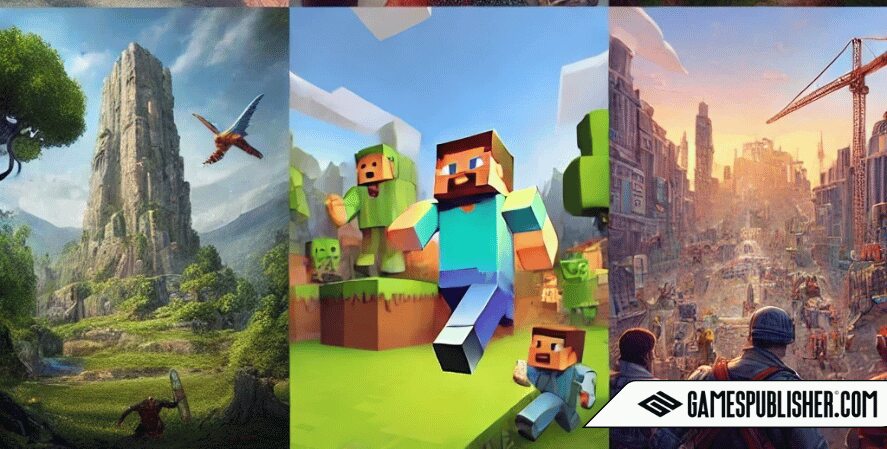
Examining successful games and their chosen programming languages can provide valuable insights. Here are a few examples:
“The Witcher 3: Wild Hunt” – C++
Developed by CD Projekt Red, this AAA title utilized C++ for its performance needs, allowing for detailed graphics and complex game mechanics.
“Angry Birds” – C#
Rovio’s iconic mobile game was developed using C# and Unity, showcasing the language’s suitability for mobile platforms and rapid development.
“Minecraft” – Java
Originally created by Markus Persson (Notch) in Java, Minecraft’s success highlights Java’s ability to handle cross-platform, performance-efficient games.
“Fortnite” – C++
Epic Games developed Fortnite using Unreal Engine, which is primarily written in C++, providing the necessary performance for this highly dynamic game.
5. Practical Tips for Choosing the Right Language

Assessing Your Team’s Skill Set and Experience
Test your team’s familiarity with different programming languages. Choosing a language your team is comfortable with can speed up development and reduce learning curves.
Considering Long-Term Maintenance and Scalability
Consider how easy it will be to maintain and scale your game in the future. Languages with extensive libraries and frameworks can offer better support for long-term projects.
Evaluating Available Tools and Frameworks
Different languages come with various tools and frameworks. For example, Unity (C#) and Unreal Engine (C++) offer comprehensive environments for game development.
Seeking Community and Industry Feedback
Engage with the developer community to gather feedback and insights on the best programming languages for your specific game project.
Conclusion
Choosing the right programming language is an important step in game development. It can affect your game’s performance, workflow, platform support, and long-term success.
However, there is no single best language for every project. C++ is strong for high-performance games, while C# is a practical choice for Unity projects. JavaScript works well for browser games, and Python can help beginners learn faster or create prototypes.
Therefore, developers should compare each option before making a final decision. Consider your team’s skills, your game’s complexity, your target platform, and the tools you plan to use.
Whether you are new to game development or already experienced, learning different programming languages can expand your options. As a result, you can build better games and choose smarter tools for future projects.
Loading survey...