
Signing a game publishing deal can be exciting, especially when a publisher offers funding, marketing, distribution, and industry support. However, many developers worry about one major question: will I lose the rights to my game after signing a publishing deal?
The answer depends on the contract. In some cases, a game publishing deal allows developers to keep full ownership of their intellectual property. In other cases, the publisher may request long-term rights, exclusive control, or even full IP ownership. Therefore, developers need to understand the agreement before signing anything.
In this updated 2026 guide, we’ll explain how a game publishing deal can affect your game rights, creative control, revenue, sequels, ports, and future ownership. More importantly, we’ll also cover what clauses to watch for and how to protect your game before entering a publishing partnership.
What is a Game Publishing Deal?
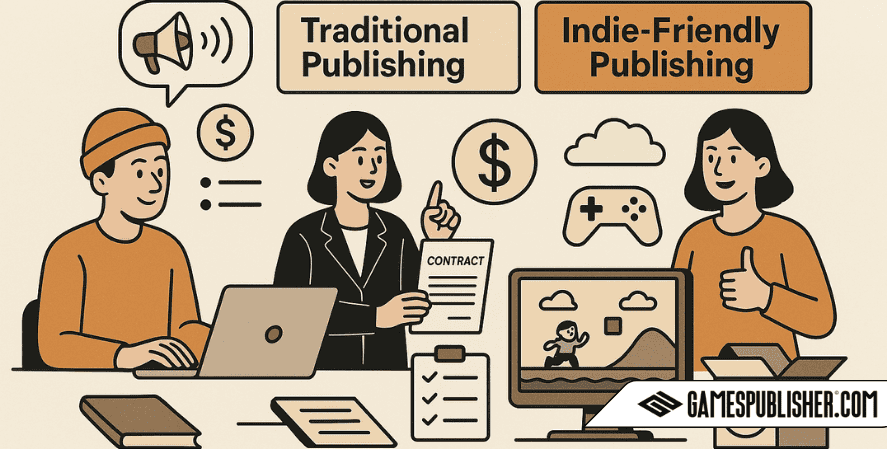
A game publishing deal is a formal agreement between a game developer and a publisher. Usually, the publisher helps bring the game to market by offering funding, marketing, production support, localization, platform access, or distribution help.
In return, the publisher often receives a share of the game’s revenue. Depending on the deal, the publisher may also receive certain rights related to marketing, distribution, platforms, sequels, or intellectual property.
Common Publisher Support Includes:
- Marketing and PR: Trailers, events, influencer outreach.
- Funding: Advances or full development funding.
- Quality Assurance (QA): Bug testing, compliance.
- Localization: Translating content for international markets.
- Distribution: Physical and digital channel access.
There are two broad models:
- Traditional Publishing: Common with large video game publishers like EA, Ubisoft, or Activision. In many cases, developers trade some level of creative authority for access to greater funding and broader audience exposure.
- Modern Indie-Friendly Publishing: In contrast to traditional deals, flexible models offered by publishers like Devolver Digital, Raw Fury, and Annapurna Interactive allow game developers to retain more autonomy.
Because these services can be expensive, publishers usually want protection for their investment. As a result, the contract may include control rights, approval rights, revenue share terms, and IP clauses.
The Publisher’s Perspective
From the publisher’s perspective, game development represents a high-risk investment. Because they contribute significant resources such as money, time, and brand equity they often seek to protect that investment. As a result, publishers may demand control over key aspects of the game, including:
- Game content and direction
- Release schedules
- Monetization strategies
- Marketing and PR campaigns
In other words, their role isn’t just logistical; it’s strategic. Most video game publishing industry contracts reflect this through detailed clauses that assert their influence.
The Developer’s Dilemma
Why do developers still sign these deals?
- Visibility: Competing in the saturated gaming market is tough. Publishers offer reach.
- Funding: Many game developers can’t self-fund.
- Resources: Localization, QA, and marketing are expensive.
The trade-off? Some level of control and independence. And if you don’t negotiate carefully, the cost could be your intellectual property (IP).
Before signing a contract, developers should understand the different types of rights that may appear in a game publishing deal.
Game Publishing Deal and Levels of Creative Control
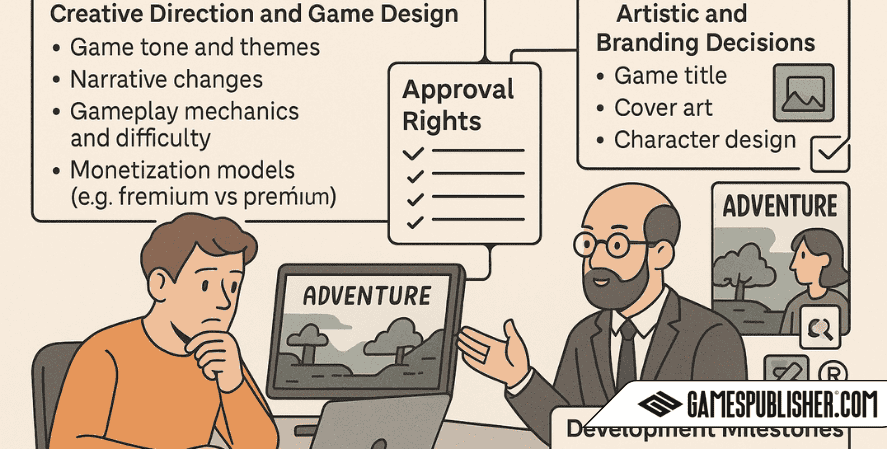
Creative Direction and Game Design
A key concern in any game publishing contract is whether the publisher can dictate creative decisions. This may include:
- Game tone and themes
- Narrative changes
- Gameplay mechanics and difficulty
- Monetization models (e.g., freemium vs premium)
Consequently, some publishers even include “approval rights” for key creative milestones, essentially giving them the power to override your vision.
Artistic and Branding Decisions
Beyond gameplay, publishers often want input on:
- Game title
- Cover art
- Character design
- Studio logo usage
This affects not only your game’s identity but also your studio’s brand. Some biggest video game publishers insist on branding decisions that align with their existing portfolio.
Control Over Development Milestones and Deadlines
Publishers often define “milestones” for funding release:
- Alpha, Beta, Gold stages
- Feature lock deadlines
- Content freezes
These milestones usually come with approval gates. If the publisher isn’t satisfied, payment could be withheld—or worse, development delayed.
Game Publishing Deal and Ownership of Intellectual Property (IP)
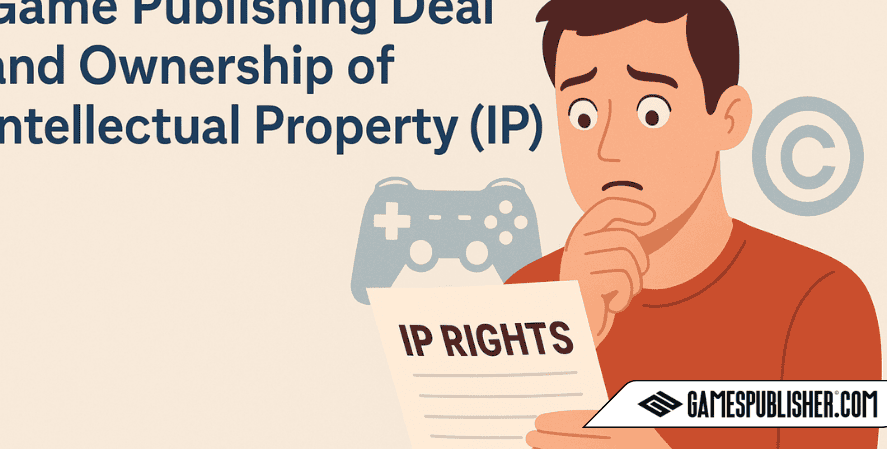
Who Legally Owns the Game After Signing?
The big question on every developer’s mind: do you retain ownership of your game after signing?
Ownership depends on the contract. Common models:
- Licensing Agreement: You retain ownership, but grant the publisher distribution or commercialization rights for a period.
- IP Transfer: You sell or assign the game’s IP to the publisher permanently or conditionally.
- Joint Ownership: Rare but possible, especially in co-development scenarios.
Therefore, maintaining ownership allows you to manage everything from the game’s codebase and characters to its universe and future installments.
IP Clauses You Must Understand
Watch out for clauses related to:
- Perpetual vs Term-Limited Licenses: Does the publisher get rights forever or only for 3–5 years?
- Exclusive vs Non-Exclusive Rights: Can you work with others too?
- Sequels, Spin-offs, Ports, and Merchandise: Who owns future iterations?
The video game publishing industry has evolved, but some publishers still try to lock down full IP rights especially if they fund development upfront.
What Happens When the Deal Ends?
Another crucial aspect is post-deal control:
- Can you self-publish a sequel?
- Can you port your game to new platforms?
- Who owns the game’s digital storefront pages and community?
A well-written game publishing contract should include termination and reversion clauses that allow you to regain full rights if the partnership ends.
Financial Leverage vs Control in a Game Publishing Deal
Advances, Royalties, and Revenue Share
Most game publisher deals include:
- Advance Against Royalties: Upfront money the publisher recoups from initial sales.
- Royalty Share: You get a percentage of post-recoup revenue.
Larger upfront payments typically come with increased demands from the publisher in terms of control and decision-making. Be aware: in extreme cases, you may make little to nothing until the advance is fully recouped.
Development Budget and Publisher Oversight
Publishers often tie control to budget size:
- Higher budget = More oversight
- Lower budget = More developer freedom
This can impact:
- Feature prioritization
- Hiring decisions
- Outsourcing choices
Marketing Power vs Brand Control
While publishers bring in marketing muscle, control can be tricky:
- Who creates trailers?
- Who manages influencer relationships?
- Who decides which game genres or video game genres to market to?
If marketing misrepresents your game, it could confuse or alienate your audience hurting long-term reputation.
Legal Deep Dive: What Contracts Really Say
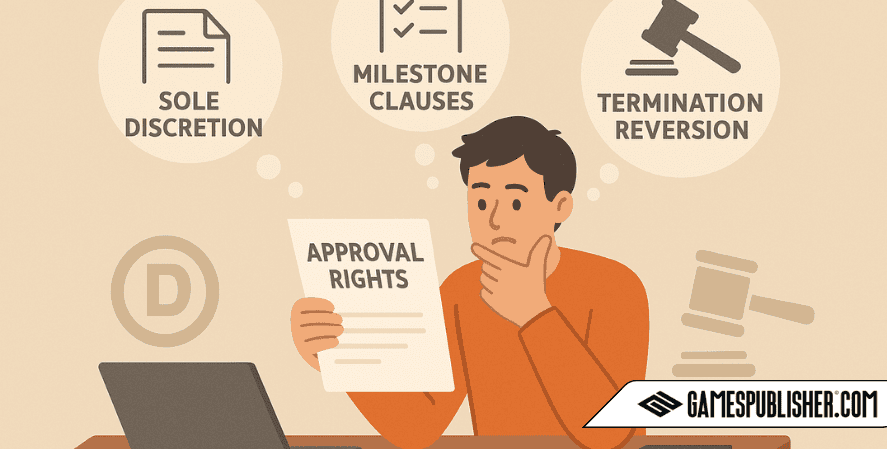
“Approval Rights” and What They Mean
These are legal clauses that define when the publisher can say “no”:
- “Reasonable approval” = Shared decision-making
- “Sole discretion” = Publisher has full control
Always push for shared or mutual approvals in your game publishing contract.
Hidden Traps in Milestone Clauses
Milestones aren’t just scheduling tools—they can be control mechanisms.
Examples:
- A milestone tied to creative output (e.g., a level design) can be rejected indefinitely.
- Payment tied to approval gives the publisher leverage over your progress.
Always define:
- What “approval” means
- Timelines for response
- Dispute resolution processes
Termination and Reversion Clauses
A must-have clause, especially in publishing indie game deals. It defines:
- What happens if the publisher drops out
- Whether you get back your IP
- What happens to unsold inventory or digital storefront access
Without a clear exit strategy, you’re stuck even if the publisher underdelivers.
Game Publishing Deal Case Studies and Outcomes
Developers Who Lost Control
- Digital Homicide vs. Steam Community: A legal and PR disaster stemming from poor community relations and lack of publisher guidance.
- Fez and Polytron: Developer Phil Fish cited publisher pressures and public expectations as a reason for canceling Fez II.
In both cases, lack of alignment between developers and partners led to creative burnout or loss of opportunity.
Developers Who Negotiated for Independence
- Supergiant Games (Bastion): Negotiated a distribution-only deal with Warner Bros., retaining full creative control.
- No More Robots (Descenders): Partnered with Xbox Game Pass while successfully maintaining their creative independence and indie identity.
These cases show that developers with leverage due to a polished game or media buzz can secure favorable terms.
Publisher Perspectives: When They Support Developer Autonomy
Indie-focused game publishers like:
…are known for respecting game developers‘ creative autonomy. Their deals often emphasize mutual respect, creative freedom, and fair revenue share especially important in publishing indie game efforts.
How to Negotiate a Game Publishing Deal Without Losing Control
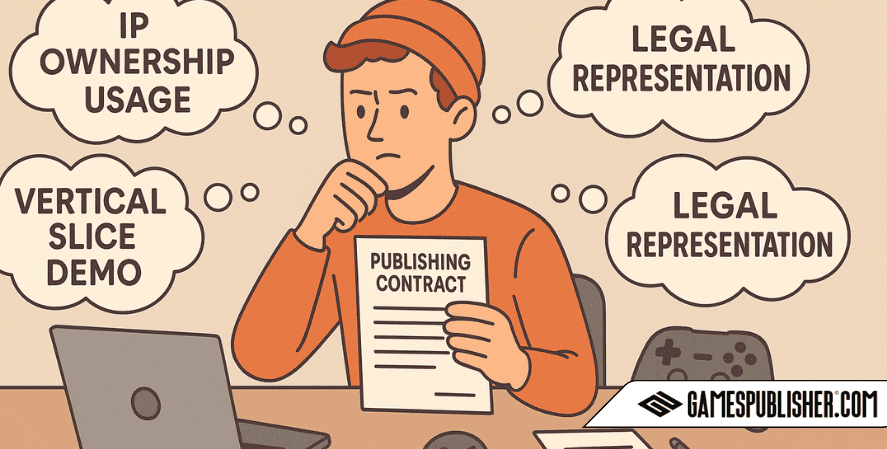
Know What You Can Negotiate (And What You Can’t)
Negotiable:
- IP ownership and usage
- Milestone definitions and approval rights
- Royalties and revenue share
Less negotiable:
- Platform exclusivity
- Minimum revenue thresholds
- Recoupment terms
Understanding this improves your position when seeking how to get a game publishing deal that works for you.
Leverage Your Game’s Strength and Market Position
Before signing, build leverage by:
- Polishing a vertical slice or demo
- Gaining press coverage
- Building a following (Twitter, Reddit, Discord)
A buzzworthy game is more attractive to Game Publishers, giving you power to push back on restrictive terms.
Legal Representation is Non-Negotiable
Never sign a game publishing contract without legal review.
- Hire a lawyer experienced in game development
- Use organizations like IGDA or Law for Creators for guidance
- Explore pro bono or low-cost legal services for indies
Contracts are complex—don’t go it alone.
Game Publishing Deal Alternatives That Preserve Creative Freedom
Self-Publishing Pros and Cons
Thanks to platforms like:
…developers can launch games independently. But it’s tough.
Pros:
- Full creative and financial control
- No need to give away IP
- Flexibility in updates and releases
Cons:
- Discoverability is low
- Marketing is on your shoulders
- No funding safety net
Learning the process of releasing your game on Steam is an essential early move for any aspiring developer.
Crowdfunding and Community-Backed Projects
Platforms like:
- Kickstarter
- Patreon
- Early Access
…let fans fund your game directly.
Pros:
- Community involvement builds loyalty
- No publisher interference
Cons:
- Public pressure can be intense
- Expectations must be managed carefully
Hybrid Models and Strategic Partnerships
Hybrid options include:
- Co-publishing deals
- Marketing-only support
- Platform exclusivity (e.g., Epic store funding)
These can offer the best of both worlds: support without full creative surrender.
Should You Sign a Game Publishing Deal?
A game publishing deal can be a smart move if you need funding, marketing support, localization, QA, platform access, or launch guidance. However, it is not always the right choice.
You may benefit from a publisher if:
- You cannot self-fund development
- You need strong marketing support
- You want help reaching consoles
- You need QA or localization support
- You lack launch experience
- Your game has commercial potential but limited visibility
On the other hand, you may want to avoid a publisher if:
- You want full creative control
- You already have funding
- You have a strong audience
- You can manage marketing yourself
- The publisher wants full IP ownership
- The contract has unclear financial terms
Ultimately, the best deal is not always the biggest offer. Instead, the best deal is the one that supports your game while protecting your rights.
Frequently Asked Questions (FAQs)
No. Many developers keep their IP rights when signing a game publishing deal. However, the contract must clearly state that the developer keeps ownership. Always check whether the deal is a license, transfer, or shared ownership arrangement.
Yes, a publisher may influence the game if the contract gives them approval rights. However, you can reduce this risk by defining creative boundaries, approval timelines, and shared decision-making rules.
A limited licensing agreement is often safer than an IP transfer. This allows the publisher to market and sell the game while the developer keeps ownership.
It depends on the contract. Some publishers ask for sequel, DLC, or spin-off rights. Therefore, developers should check whether the deal only covers the current game or future projects too.
If the contract includes a reversion clause, rights may return to the developer after the deal ends. However, without clear reversion terms, the publisher may keep certain rights for a long time.
Yes. A lawyer experienced in game contracts can help you understand IP rights, recoupment, royalties, approval rights, termination terms, and reversion clauses.
Conclusion: The Truth About Losing Control in a Game Publishing Deal
So, will you lose the rights to your game after signing a publishing deal? The answer depends on the contract.
A game publishing deal does not automatically mean you lose your IP. In many modern publishing agreements, developers keep ownership while giving the publisher limited rights to market, publish, and distribute the game. However, some contracts may include IP transfer, long-term exclusivity, broad approval rights, or control over sequels and ports.
Therefore, developers should never rely on verbal promises. Instead, review the contract carefully, negotiate important terms, and get legal advice before signing.
In 2026, game developers have more options than ever. You can self-publish, crowdfund, enter Early Access, work with marketing partners, or negotiate a publisher-friendly but developer-safe deal. With the right preparation, you can get support without giving away your creative future.
For more guidance on game publishing, developer rights, and publishing agreements, visit Gamespublisher.com.
Loading survey...