
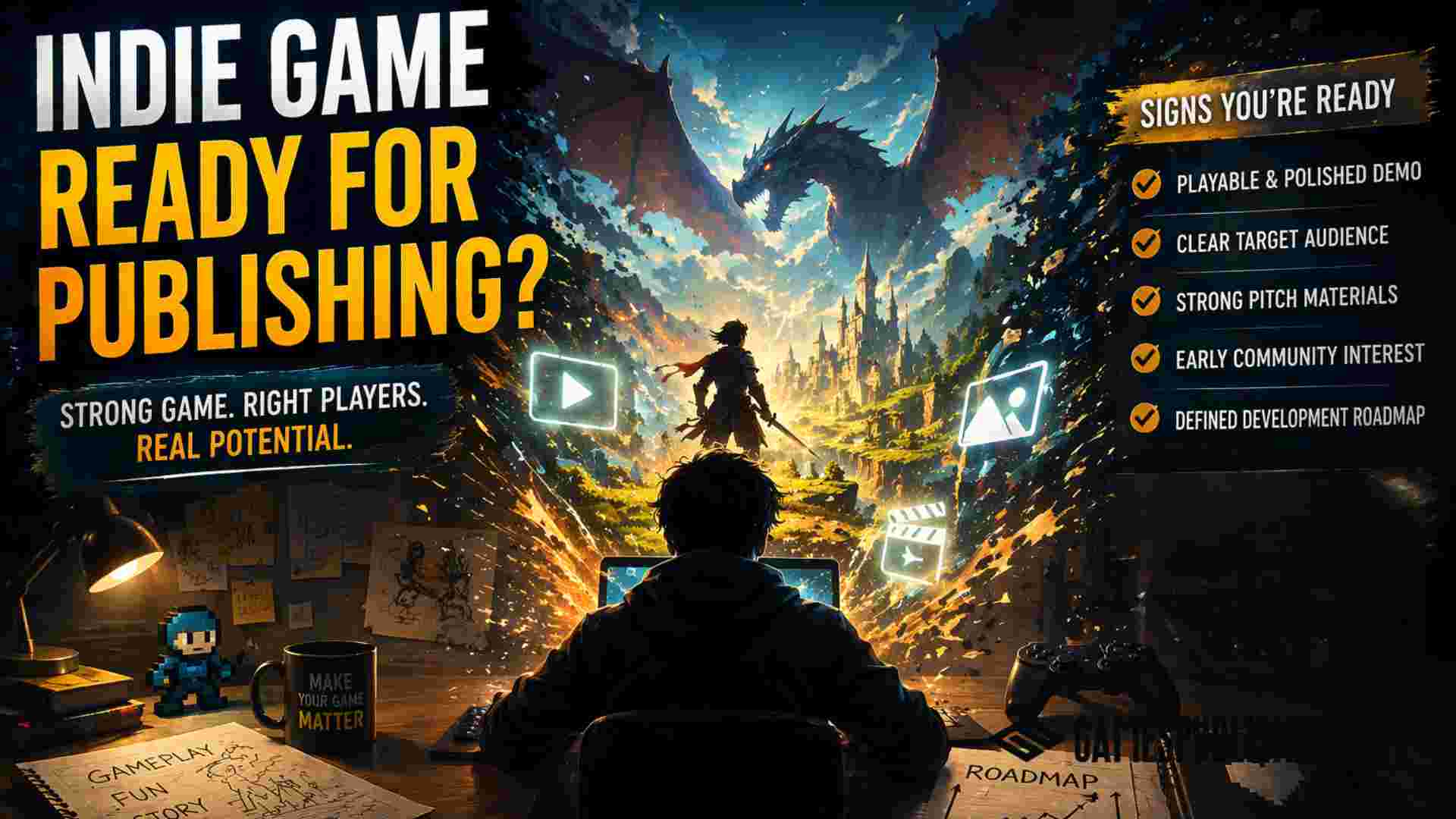
When Is Your Indie Game Ready is a question almost every creator of indie video games will face at some point. You might have a working build, a cool idea, or even a small fan base. Still, that does not always mean you are ready to approach a video game publisher. Timing plays a big role in game publishing, and getting it wrong can cost you funding, exposure, and momentum.
On Gamespublisher.com, this topic matters because many game developers focus only on finishing their game. However, readiness is not just about development. It is also about market fit, planning, and how well you present your project. In today’s gaming industry, publishers look for more than passion. They want proof that your game can succeed.
So, how do you know when the time is right? Let’s break it down step by step.
Understanding Indie Game Readiness for Publishers
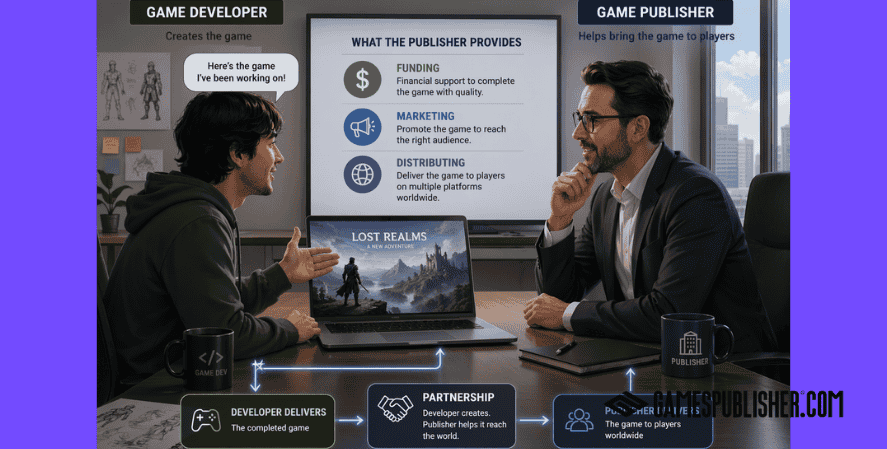
When Is Your Indie Game Ready is not just about having a complete product. In fact, many game publishers prefer projects that are still in development but show strong potential.
From a developer’s point of view, readiness often means the game is playable. On the other hand, from a publisher’s side, readiness means lower risk and higher chance of success. This includes things like audience interest, clear direction, and solid execution.
To better understand this, it helps to know what is a game developer and what is game publisher. A game developer creates the game, while a publisher helps fund, market, and distribute it on a video game distribution platform. Knowing what do game publisher do helps you prepare your game in a way that matches their goals.
Also, in a crowded video game industry, your project needs to stand out among thousands of indie games. So, readiness is about showing value, not just completion.
Development Milestones That Show Your Game Is Ready
First of all, you need something people can play. This is one of the clearest answers to When Is Your Indie Game Ready.
A playable build can be:
It does not have to be the full game. However, it must show the core idea clearly. For example, players should understand how the game feels within a few minutes.
In the world of developer video games, showing is always better than telling. Publishers want to experience your game, not just read about it.
Building a Playable Demo or Vertical Slice
Next, your core gameplay should be stable. If your main systems keep changing, then your game is not ready yet.
Your core mechanics include:
- Movement
- Combat
- Interaction systems
These should feel smooth and consistent. While small tweaks are fine, the main loop should already be fun and clear.
Many game developers make the mistake of pitching too early. They think the idea is enough. In reality, publishers want to see that the gameplay already works.
When Is Your Indie Game Ready with Technical Stability
At the same time, your game needs to run well. It does not have to be perfect, but it should not feel broken.
Focus on:
- Reducing major bugs
- Keeping stable performance
- Making UI easy to use
Across different gaming platforms, performance matters a lot. If your game crashes or lags too much, it sends a bad signal.
This is often where the defference between developers becomes clear. Some teams polish their builds early, while others wait too long. The first group usually has a better chance with publishers.
Market Signals That Indicate Readiness
Defining Your Target Audience
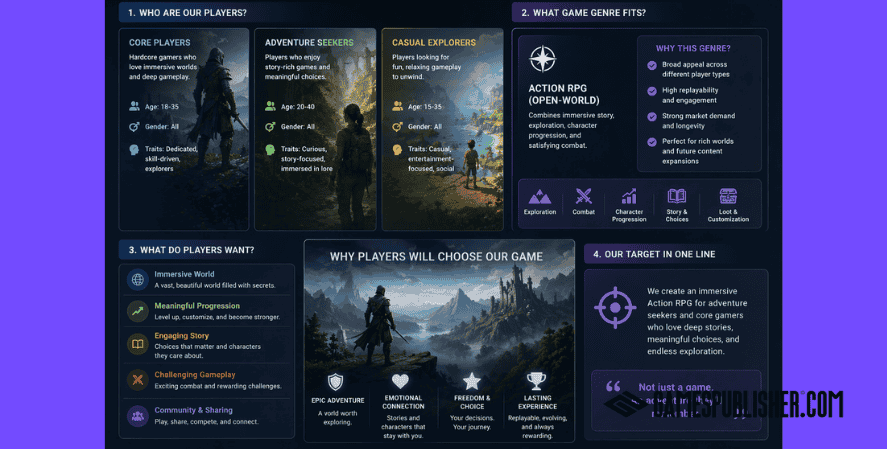
Now let’s shift to the business side. Even a great game can fail if it has no clear audience.
You should know:
- Who your players are
- What genre your game fits in
- Why people would choose your game
In game development, trying to appeal to everyone rarely works. Instead, focus on a specific group of players.
For example, fans of strategy indie games expect different features than fans of action games. Knowing this helps you shape your project better.
Researching Competing Indie Games
Along with audience, you need to understand the market. This means looking at similar indie video games and learning from them.
Ask yourself:
- What games are similar to mine
- What are they doing well
- Where can I improve or stand out
The gaming industry moves fast. Trends change quickly, so staying informed gives you an advantage.
Also, publishers expect you to know your competition. It shows that you take your project seriously.
Building Wishlist and Community Traction
Another strong signal is early interest from players. This can come in many forms.
For example:
- Steam wishlists
- Social media followers
- Active Discord groups
In modern gaming, community matters a lot. A game with early traction is less risky for a video game publisher.
Even small numbers can help. What matters is engagement and growth, not just size.
Creating a Strong Pitch for Game Publishers
Once your game and market are in place, you need to explain your idea clearly. This is where your pitch comes in.
Your value proposition should answer:
- What makes your game unique
- Why players will enjoy it
- Why it can sell
In a busy gaming industry, clarity is powerful. If a publisher does not understand your game quickly, they will move on.
When Is Your Indie Game Ready with Visual and Gameplay Assets
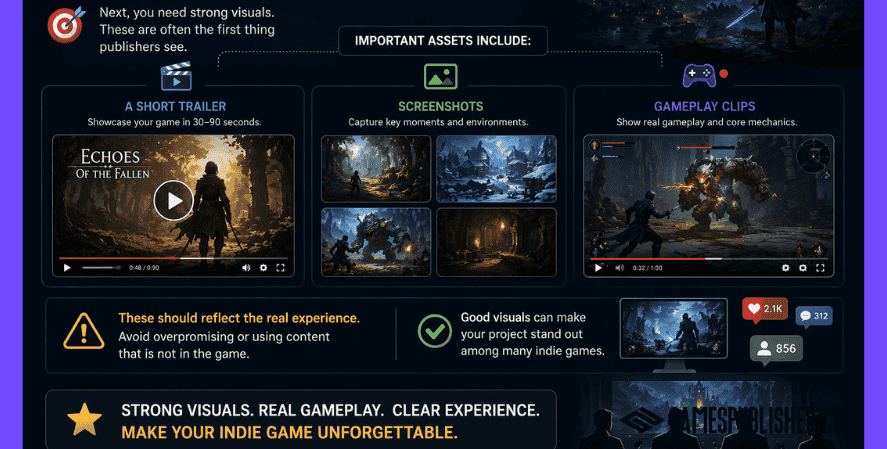
Next, you need strong visuals. These are often the first thing publishers see.
Important assets include:
- A short trailer
- Screenshots
- Gameplay clips
These should reflect the real experience. Avoid overpromising or using content that is not in the game.
Good visuals can make your project stand out among many indie games.
When Is Your Indie Game Ready with Budget and Timeline Plans
Finally, your pitch should include a plan. This shows that you understand both game development and business.
You should include:
- Estimated budget
- Development timeline
- Key milestones
Publishers want to know how long the project will take and how much it will cost. Clear planning builds trust.
Team and Production Readiness
When Is Your Indie Game Ready also depends on the people behind it. Even a strong concept can fail if the team cannot deliver.
Publishers often look at:
- Team size and structure
- Past experience
- Clear roles and responsibilities
For example, a team with a programmer, artist, and designer who understand their roles is more reliable than a group still figuring things out. In the video game industry, trust is key. A publisher needs to believe your team can finish what it starts.
Also, if you are a solo game developer, that is fine. However, you should still show how you plan to handle all parts of development. This includes art, sound, and testing.
When Is Your Indie Game Ready with Production Pipelines
Next, your workflow should be organized. This is often overlooked, but it matters a lot.
A good production pipeline includes:
- Task tracking tools
- Version control systems
- Clear milestones
These systems help you stay on track and avoid delays. In game development, things can get messy fast without proper planning.
In addition, publishers feel more confident when they see a structured process. It shows that your project is not just creative, but also manageable.
When Is Your Indie Game Ready with Post-Launch Plans
Your work does not end when the game launches. In fact, many games grow after release.
That is why publishers want to see:
- Plans for updates
- Bug fixes
- Possible new content
In the gaming industry, ongoing support can make or break a game. Players expect improvements, and active games often perform better over time.
So, when thinking about When Is Your Indie Game Ready, include what happens after launch, not just before it.
Common Mistakes Indie Developers Make
Even with good intentions, many game developers make mistakes at this stage. These can hurt your chances with game publishers.
Pitching too early with only an idea This is very common. An idea alone is not enough. Without a playable build, publishers cannot judge your game.
Over polishing without validation On the other hand, some teams spend too much time polishing without testing the market. As a result, they may build something no one wants.
Ignoring market trends The video game industry changes quickly. If your game does not match current player interests, it may struggle.
Weak or unclear pitch materials Even a good game can fail with a poor presentation. If your pitch is confusing, publishers may lose interest fast.
Avoiding these mistakes can save time and improve your chances in game publishing.
Signs Your Game Is Ready for Publishing
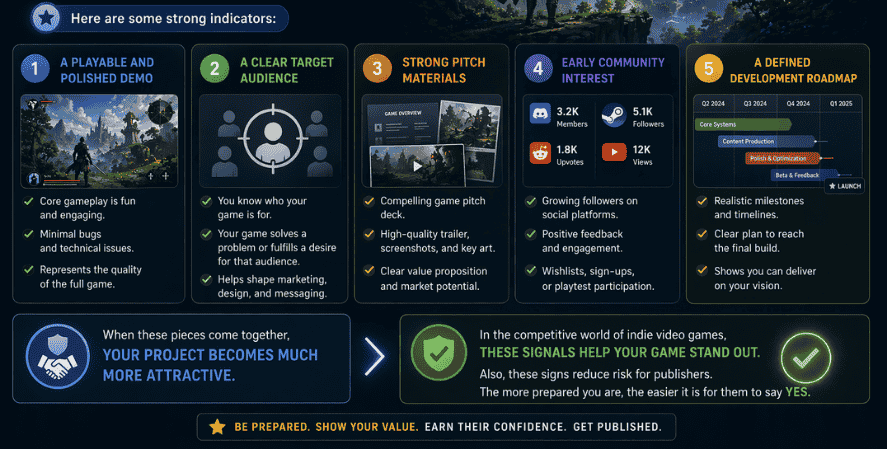
At this point, you might wonder if there are clear signs of readiness. The good news is that there are.
Here are some strong indicators:
- A playable and polished demo
- A clear target audience
- Strong pitch materials
- Early community interest
- A defined development roadmap
When these pieces come together, your project becomes much more attractive. In the competitive world of indie video games, these signals help your game stand out.
Also, these signs reduce risk for publishers. The more prepared you are, the easier it is for them to say yes.
What Publishers Look for When Deciding When Is Your Indie Game Ready
To fully answer When Is Your Indie Game Ready, you need to understand how publishers think.
Commercial Viability
First, can your game make money? This is always a key question.
Publishers look at:
- Genre popularity
- Pricing potential
- Audience size
In the gaming industry, even creative games need a business case.
Scalability and Platform Potential
Next, publishers consider where your game can succeed.
For example:
- Can it run on multiple gaming platforms
- Does it fit a major video game distribution platform
- Can it grow over time
Games that can expand often have more value.
Team Reliability
As mentioned earlier, the team matters a lot. Publishers want to work with people they can trust.
They will ask:
- Can this team meet deadlines
- Do they communicate well
- Have they finished projects before
Strong teams make projects safer investments.
Marketing Potential
Finally, publishers think about how easy it is to promote your game.
They look for:
- Unique ideas
- Strong visuals
- Clear messaging
In a crowded gaming space, marketing can make a huge difference. A game that is easy to explain and show has a better chance of success.
Conclusion
When Is Your Indie Game Ready is not a simple question with a single answer. Instead, it is a mix of development progress, market understanding, and business preparation.
A ready game is not just playable. It is stable, well planned, and backed by a clear strategy. It has a defined audience, early interest, and a team that can deliver.
In today’s indie games landscape, thinking like both a creator and a publisher can give you a strong advantage. By preparing across all these areas, you increase your chances of finding the right partner and succeeding in game publishing.
Loading survey...