
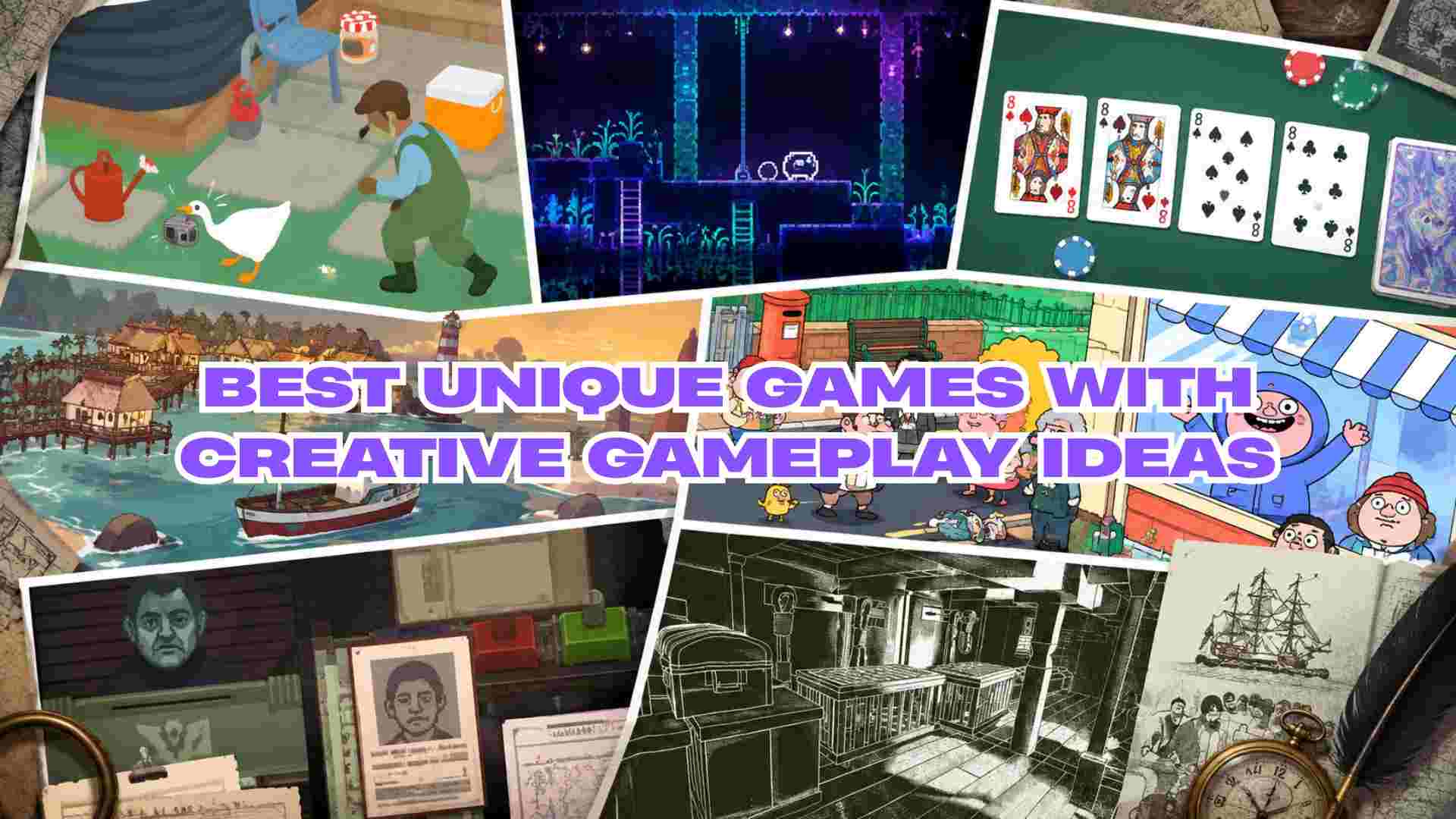
Unique games can make gaming feel fresh again when familiar genres and progression systems start to feel predictable. Many popular releases still use ideas players know well: explore a map, collect better gear, defeat enemies, and complete missions. Those systems can be fun, but sometimes you want something that plays by different rules.
A game can stand out through its mechanics, art, controls, story, or central idea. It might let you rewrite the rules of a puzzle, turn photographs into physical spaces, inspect passports for a living, or cause trouble as a goose.
This list highlights unique games that genuinely do something different. It includes indie experiments, puzzle games, unusual simulations, genre hybrids, and other titles that challenge familiar ideas about how games should work.
What Makes a Game Unique?
Being unusual is not enough to make a game interesting.
The best unique games take an original idea and turn it into a system that stays engaging after the first surprise wears off. The unusual concept should affect what the player actually does rather than exist only as a visual gimmick.
A game may stand out through:
- Original gameplay mechanics
- An unusual core concept
- Creative controls
- Distinct visual design
- Unexpected genre combinations
- Experimental storytelling
- Meaningful player choices
- An uncommon approach to progression
Some games are built around unique gameplay that changes how you think about familiar genres. Others use unique game themes to place familiar mechanics in settings you rarely see.
A unique video game does not need to reinvent every part of game design. Sometimes one strong idea is enough. Baba Is You uses a simple block-pushing format, for example, but lets the player change the rules of each puzzle. Dredge uses familiar fishing mechanics but combines them with exploration, resource management, and horror.
The strongest examples connect their unusual ideas to the player’s actions. That connection is what makes them memorable.
Best Unique Games to Play
If you want something different from the usual action game, shooter, RPG, or open-world adventure, these titles are good places to start.
| Game | What Makes It Unique | Genre | Platform |
|---|---|---|---|
| Tingus Goose | Surreal idle progression built around growth, physics, and automation | Idle, simulation, strategy | PC |
| Baba Is You | Lets players rewrite the rules of each puzzle | Puzzle | PC, consoles, mobile |
| Viewfinder | Turns photographs into parts of the playable 3D world | Puzzle | PC and consoles |
| Inscryption | Mixes cards, puzzles, secrets, and changing game structures | Card game, puzzle | PC and consoles |
| The Stanley Parable: Ultra Deluxe | Makes narration react to player choices and disobedience | Narrative adventure | PC and consoles |
| Untitled Goose Game | Turns everyday mischief into the main objective | Puzzle, comedy | PC and consoles |
| Animal Well | Rewards exploration, hidden routes, and environmental discovery | Puzzle, exploration | PC and consoles |
| Balatro | Rebuilds poker hands around roguelike scoring and deck building | Card game, roguelike | PC, consoles, mobile |
| Dredge | Combines fishing, exploration, management, and horror | Adventure, fishing | PC and consoles |
| Thank Goodness You’re Here! | Builds absurd comedy directly into player interaction | Comedy adventure | PC and consoles |
| Papers, Please | Makes document inspection the main gameplay system | Simulation, puzzle | PC and mobile |
| Return of the Obra Dinn | Makes deduction and identity reconstruction the core of progression | Mystery, puzzle | PC and consoles |
1. Tingus Goose: Unique Games Can Get Truly Surreal
Tingus Goose shows how a familiar idle-game loop can feel new when the presentation and progression system are pushed in an unexpected direction.
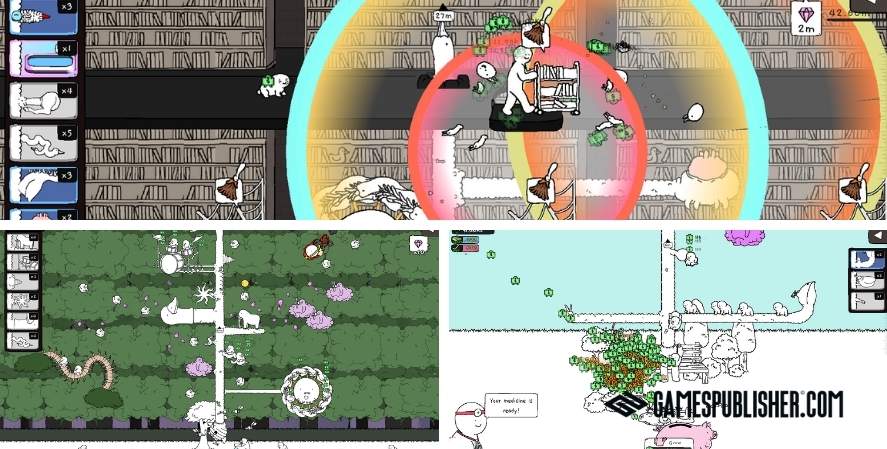
Developed by SweatyChair and published by Playsaurus and UltraPlayers, the PC game launched on Steam on December 1, 2025. Steam lists it under casual, indie, simulation, and strategy, with user tags that include incremental, idler, management, surreal, physics, and automation.
The game revolves around growing a bizarre goose tree and arranging systems that help generate more value over time. Its strange creatures, physical interactions, and escalating automation make the screen feel more like an evolving machine than a static upgrade menu.
The basic idle loop is still easy to understand:
- Generate resources.
- Buy or place upgrades.
- Improve production.
- Unlock new systems.
- Repeat with a stronger setup.
What makes Tingus Goose different is the way those familiar systems are presented. Progress is not only about watching numbers rise. Part of the appeal comes from seeing how the goose tree changes, how objects interact, and what the next surreal stage introduces.
It may be a good fit if you already enjoy incremental games but want something less predictable than the usual factory, business, or fantasy theme.
Best for: Players who enjoy idle games, automation, surreal humor, and unusual visual ideas.
2. Baba Is You
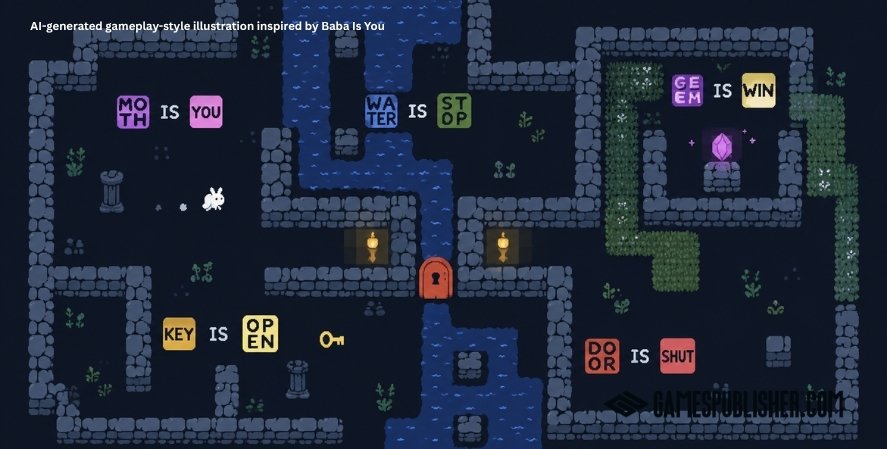
Baba Is You starts like a simple puzzle game. You move around small levels, push blocks, and try to reach a goal.
Then you realize that the rules are also blocks.
Statements such as “BABA IS YOU” or “WALL IS STOP” appear inside each stage. By moving the words, you can change how the level works.
If you break “WALL IS STOP,” walls may no longer block movement. If you create a new rule, another object may suddenly become controllable.
This completely changes the usual logic of puzzle games.
Most puzzles ask you to understand a fixed set of rules and find the solution within them. Baba Is You asks you to manipulate those rules directly.
That creates puzzles where the solution often comes from changing your assumptions rather than simply finding a hidden route.
The idea is easy to understand, but the possibilities become increasingly complex.
Best for: Players who enjoy logical puzzles and moments where an impossible problem suddenly makes sense.
3. Viewfinder
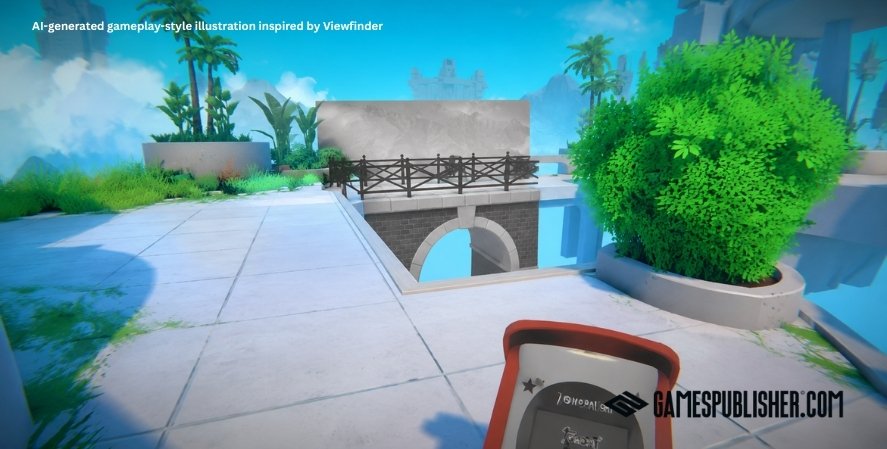
Viewfinder turns photographs and images into physical spaces.
You may find a picture showing a walkway, building, room, or object. When you hold that image in front of the environment and place it, the contents of the picture become part of the 3D world.
A flat image can suddenly create a path that did not exist seconds earlier.
This creates a clever mix of photography, perspective, and spatial reasoning.
The mechanic works because it is immediately visual. Players can see an image, imagine how it might fit into the current space, and then test the idea.
Viewfinder also plays with your expectations about what is real inside a game world. An image normally represents something. Here, the image can become the thing it represents.
Best for: Puzzle fans who like perspective tricks and unique games that change how they look at virtual spaces.
4. Inscryption
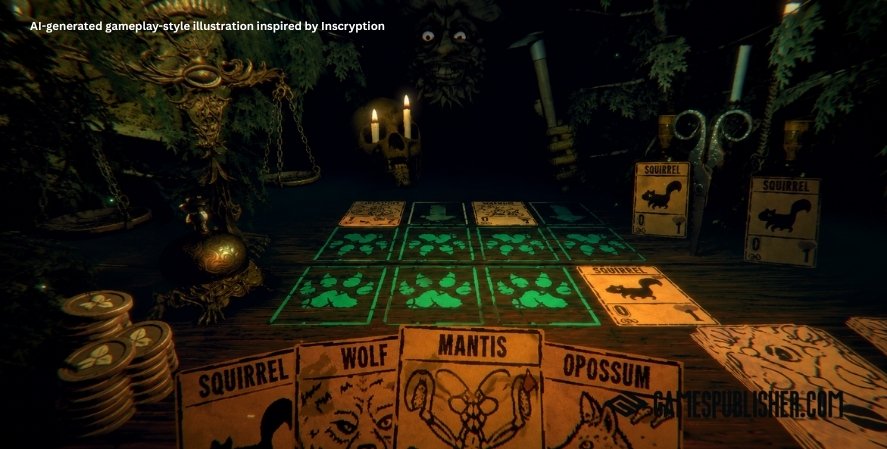
At first glance, Inscryption looks like a dark card game.
That description is accurate, but incomplete.
Cards and deck building are central to the experience, yet the game also contains puzzles, exploration, secrets, and narrative elements that constantly make you question what kind of game you are playing.
Its greatest strength is the way it refuses to remain within one familiar structure.
The card mechanics give players a system they can learn and improve at, while the surrounding mystery creates reasons to examine details beyond the cards themselves.
Inscryption is especially effective when played with limited prior knowledge. Explaining every surprise would weaken much of what makes the experience memorable.
The important point is that its unusual structure is more than a gimmick. Changes in format support its atmosphere and story.
Best for: Players who like card games, mysteries, escape-room ideas, and games that enjoy surprising their audience.
5. The Stanley Parable: Ultra Deluxe
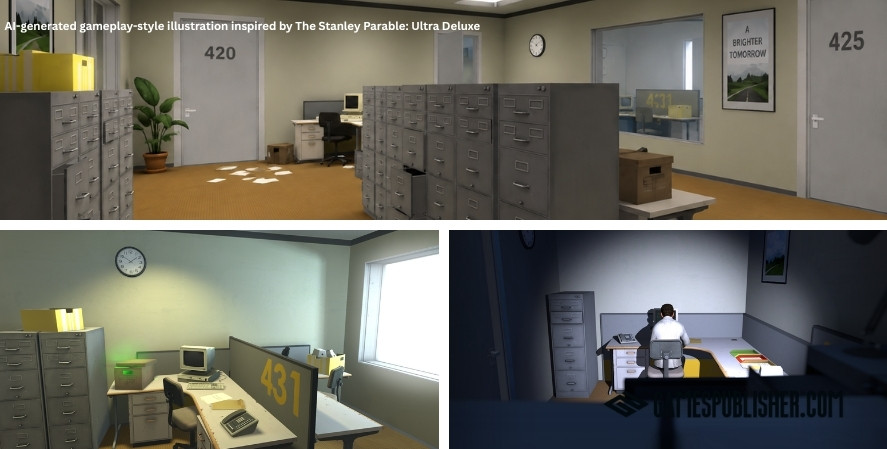
The Stanley Parable begins with an ordinary office worker walking through an empty workplace.
A narrator tells you what Stanley is doing.
Then you can choose not to do it.
That simple conflict creates much of the game.
When the narrator tells you to go through one door, you can take another. When you ignore instructions, the narration changes. Sometimes the game responds with irritation. Sometimes it turns your decision into a new story.
The experience examines choice, control, game design, and the relationship between the player and the person creating the experience.
Many games offer branching choices. The Stanley Parable makes the act of choosing, obeying, refusing, and repeating into the main subject.
Ultra Deluxe expands the concept with additional material while keeping the self-aware approach that made the original memorable.
Best for: Players who enjoy narrative experiments, dry humor, and games that comment on games.
6. Untitled Goose Game
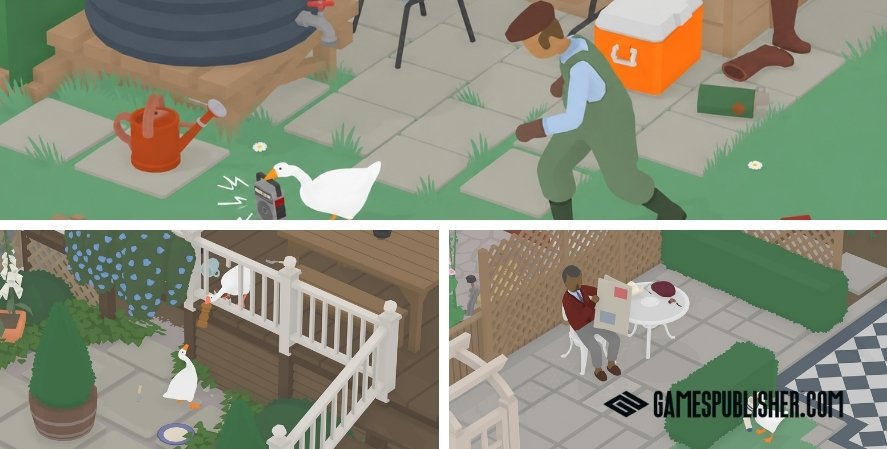
Screenshot from Untitled Goose Game. Developed by House House and published by Panic. Used for editorial and informational purposes. All game rights and assets belong to their respective owners.
Untitled Goose Game gives you a very simple role.
You are a goose.
You are also a nuisance.
Instead of saving a kingdom or preventing a disaster, you enter ordinary spaces and create problems for the people living there.
You steal objects, interrupt routines, honk at inconvenient times, and complete small objectives through environmental interaction.
The game works because your actions create the comedy.
A joke is not simply shown in a cutscene. You cause it by understanding the environment and deciding how to interfere with it.
The controls and goals stay easy to understand, which makes the concept accessible even to people who do not regularly play complex games.
It is a good example of how a small idea can support an entire experience when every system reinforces the same theme.
Best for: Players looking for light puzzles, playful experimentation, and interactive comedy.
7. Animal Well
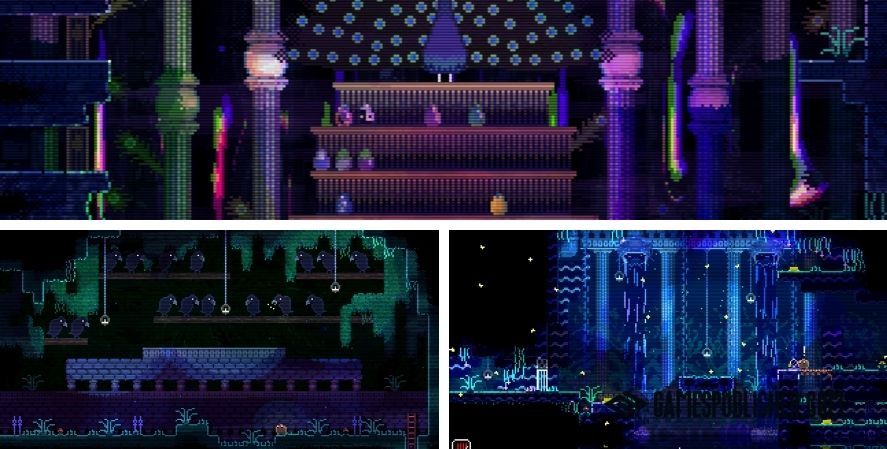
Screenshot from Animal Well. Used for editorial and informational purposes. All game artwork, characters, and other assets belong to their respective copyright owners.
Animal Well rewards curiosity.
Its world is filled with interconnected spaces, unusual creatures, hidden routes, tools, and environmental puzzles.
The game gives players room to discover how things work instead of explaining every system immediately.
That lack of constant guidance is an important part of the experience.
A room that appears simple may hide another purpose. An object that seems useful for one task may later solve a completely different problem.
This encourages experimentation.
Animal Well also uses a distinctive pixel-based presentation. Light, darkness, animation, and small environmental details help make the world feel mysterious without relying on long explanations.
Progress comes from paying attention.
Best for: Players who enjoy exploration, hidden secrets, environmental puzzles, and discovering mechanics on their own.
8. Balatro
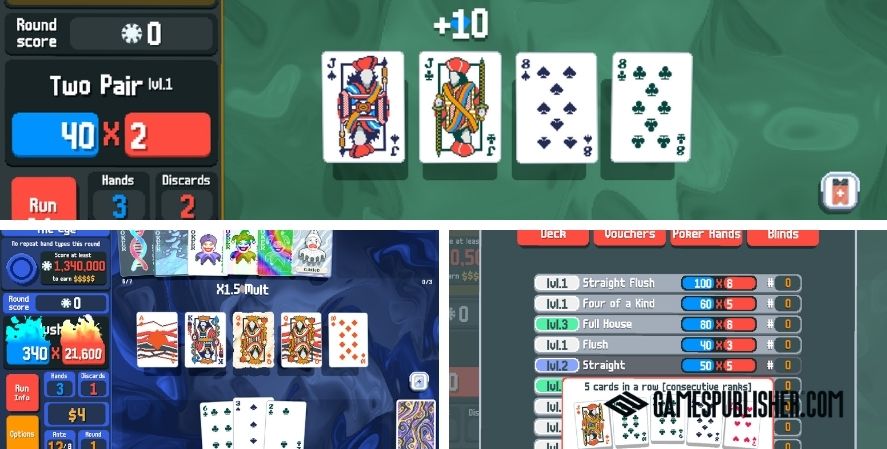
Screenshot from Balatro. Used for editorial and informational purposes. All game artwork, characters, and other assets belong to their respective copyright owners.
Balatro begins with something almost everyone recognizes: poker hands.
Pairs, straights, flushes, and other familiar combinations become the foundation for a much less familiar progression system.
The game combines those concepts with roguelike structure and a large range of modifiers. Jokers and other upgrades change how hands score, which cards become valuable, and what kind of strategy makes sense during a run.
The goal is not to play traditional poker against another person.
Instead, you build an increasingly powerful scoring engine.
One run might reward a familiar hand. Another might encourage you to reshape your deck around a completely different combination.
That creates an addictive tension between probability, planning, and experimentation.
Balatro shows how developers can take rules that have existed for generations and turn them into something that feels new.
Best for: Players who enjoy card combinations, score chasing, roguelikes, and building powerful systems.
9. Dredge
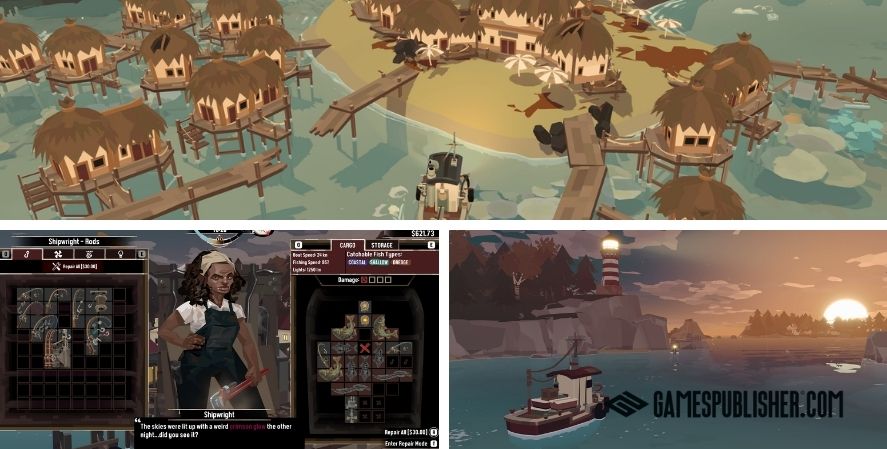
Screenshot from Dredge. Used for editorial and informational purposes. All game artwork, characters, and other assets belong to their respective copyright owners.
Fishing games are usually relaxing.
Horror games usually are not.
Dredge brings those ideas together.
During the day, you travel between islands, catch fish, sell what you find, improve your boat, and complete tasks.
As darkness approaches, the sea becomes more dangerous.
That day-and-night structure gives ordinary fishing decisions greater weight. Staying out a little longer might help you catch something valuable, but it can also expose you to new risks.
Inventory space also matters. Fish come in different shapes, so organizing your cargo becomes its own small puzzle.
Dredge’s concept works because its genres support one another. Fishing creates routine. Exploration creates curiosity. Resource management encourages planning. Horror makes familiar journeys feel dangerous.
Best for: Players who want exploration and management with a darker atmosphere.
10. Thank Goodness You’re Here!
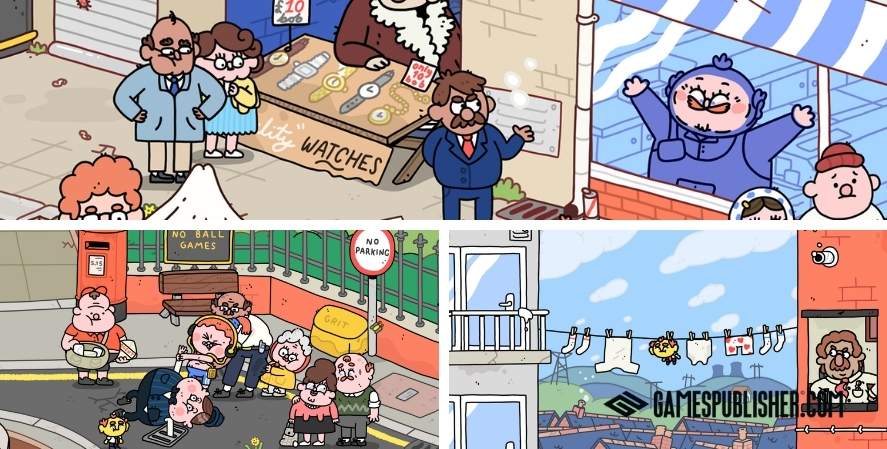
Screenshot from Thank Goodness You’re Here! Used for editorial and informational purposes. All game artwork, characters, and other assets belong to their respective copyright owners.
Thank Goodness You’re Here! builds its identity around comedy, visual style, and constant interaction.
Rather than treating humor as something that happens between gameplay sections, the game often makes interaction itself part of the joke.
You move through a colorful town filled with odd situations and unusual characters. Small tasks can escalate into increasingly ridiculous events.
The exaggerated presentation helps the game maintain its personality from one scene to the next.
Comedy is difficult to build into interactive systems because players control timing and movement. This game embraces that unpredictability rather than separating jokes from play.
Best for: Players who enjoy absurd humor, unusual characters, and short adventures with a strong visual identity.
11. Papers, Please
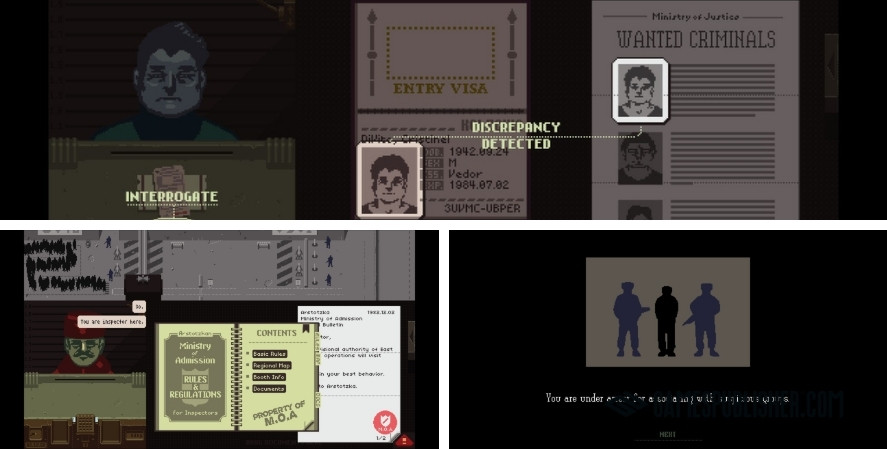
Screenshot from Papers, Please. Used for editorial and informational purposes. All game artwork, characters, and other assets belong to their respective copyright owners.
Papers, Please turns paperwork into a source of tension.
You work as an immigration inspector at a border checkpoint. Travelers present passports, permits, and other documents. Your job is to decide who may enter.
The basic task sounds repetitive.
That is intentional.
New rules are gradually introduced. Documents must be compared. Dates must be checked. Details may conflict. Mistakes can affect your income.
At the same time, travelers arrive with personal stories and requests.
You may understand why someone wants to cross the border while also knowing that their documents do not meet the required rules.
That turns a simple inspection system into a game about routine, pressure, consequences, and moral choice.
The story emerges through your work instead of relying mainly on cinematic scenes.
Best for: Players interested in decision-making, systems, moral pressure, and narrative simulation.
12. Return of the Obra Dinn
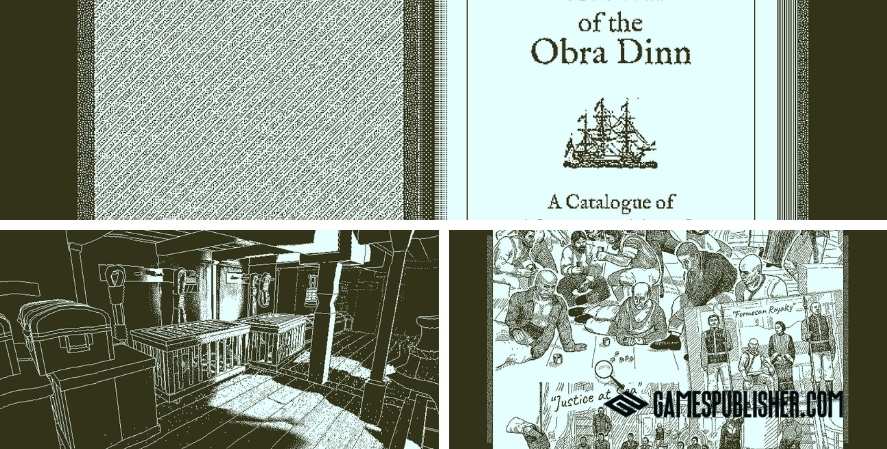
Screenshot from Return of the Obra Dinn. Used for editorial and informational purposes. All game artwork, characters, and other assets belong to their respective copyright owners.
Return of the Obra Dinn makes investigation the main form of progression.
You board a ship whose crew has disappeared. Instead of receiving a traditional list of quests, you must reconstruct what happened.
You examine moments connected to individual deaths, study the environment, listen to conversations, and identify people based on limited clues.
A uniform may reveal someone’s profession. An accent might suggest a nationality. A person’s location on the ship may help you understand their role.
The game trusts players to connect those details.
Its visual presentation is also immediately recognizable. The limited-color style resembles early computer graphics, giving the game an identity that looks very different from most modern 3D releases.
More importantly, the art supports the investigation. Players must carefully study scenes rather than rush through them.
Best for: Players who enjoy deduction, observation, mysteries, and solving problems without constant hints.
Unique Games With Unusual Gameplay Mechanics
The games above stand out for different reasons. Looking at those differences can help you find more titles that match your interests.
Unique Games That Change Their Own Rules
Baba Is You makes rules into physical objects.
The Stanley Parable takes another approach. Its rules are not blocks you can move, but the game constantly reacts when you refuse to behave as expected.
Both games ask players to question something that is normally fixed.
In most games, rules exist outside the world. Players learn them and operate within them.
These unique games make the rules themselves part of the experience.
That form of unique gameplay can create memorable moments because progress requires you to rethink what you thought the game allowed.
Games Built Around Strange Simulations
Simulation games can model almost anything.
That freedom gives developers room to turn uncommon activities into complete systems.
Tingus Goose starts from the familiar idea of idle progression but surrounds it with surreal growth, physics, and automation.
Papers, Please simulates administrative work. The player spends much of the game checking information instead of fighting enemies or exploring a large world.
These examples show that a compelling game loop does not need to begin with an activity that sounds exciting on paper.
The design matters more.
A routine task can become tense when mistakes carry consequences. A simple idle loop can become engaging when players want to discover what their evolving system will produce next.
Games That Mix Genres
Some games become distinctive by combining ideas that rarely appear together.
Dredge mixes fishing, exploration, inventory management, and horror.
Inscryption combines card mechanics with puzzles, narrative mystery, and structural surprises.
Balatro takes poker language and combines it with roguelike progression.
Genre mixing works best when the parts affect one another.
Dredge would lose much of its tension if nighttime danger had no effect on fishing decisions. Balatro would be less interesting if its upgrades did not transform how familiar card combinations score.
A hybrid needs connections between its systems, not just a long list of genre labels.
Games That Turn Simple Ideas Into Full Experiences
A game does not need a complex premise to feel original. Untitled Goose Game is built around one clear idea: you are a troublesome goose. Papers, Please begins with another simple task: inspect documents at a border.
What matters is how much the designers build from that central activity. A clear concept can be easy to understand while still creating surprising situations.
Unique Games With Unusual Art and Themes
Mechanics are only one way to stand out.
Visual design, setting, character design, sound, and subject matter can completely change how a familiar system feels.
Some unique game themes work because the art and mechanics reinforce the same idea.
Return of the Obra Dinn uses a limited visual palette that makes the world resemble an older computer game. That is memorable on its own, but it also gives investigation scenes a stark quality that encourages careful observation.
Thank Goodness You’re Here! takes the opposite approach. Its colorful, exaggerated characters support a style of comedy that depends on ridiculous reactions and escalating situations.
Tingus Goose uses surreal design to make a familiar idle-game structure feel less predictable.
Animal Well creates mystery through darkness, glowing objects, creatures, and small environmental details.
These games illustrate several ways art can create a distinctive identity:
A hand-drawn style can make a world feel personal. Retro graphics can create limitations that become part of the game’s design. Minimalist art can direct attention toward mechanics. Surreal environments can make discovery unpredictable. Unusual character designs can establish a tone before a single line of dialogue appears.
The key question is not whether the art looks unusual. It is whether the style supports the experience.
Why Indie Games Often Feel More Experimental
Indie games do not have a monopoly on creative ideas. Large studios can produce experimental games, and small developers can make very traditional ones.
Still, indie development can create useful conditions for experimentation.
A small team may decide to build an entire project around one specific mechanic. The game does not always need to appeal to every type of player.
A lower production scale can also make narrower ideas practical.
A developer might focus on a two-hour comedy game, an unusual puzzle system, or a highly specific visual style that would be difficult to justify in a huge project built around a much larger budget.
Digital stores also make it easier for niche audiences to discover those projects.
Itch.io is especially useful for finding prototypes, experimental concepts, game jam projects, and small releases. If that sounds interesting, browse our guide to the best games on itch.io and hidden gems by genre.
Steam also gives indie developers access to a large audience. Our list of the best indie games published on Steam is another place to look for creative releases.
Originality can matter on the business side too.
Developers pitching a project often need a clear hook that explains why someone should pay attention. That hook may come from gameplay, visual direction, theme, or an unusual genre combination. Our guide on how to get a game publisher for your indie game explores that process in more detail.
You can also see our guide to indie game publishers accepting submissions in 2026 if you are approaching the subject as a developer rather than only as a player.
How to Find More Unique Games
You do not have to wait for an unusual game to appear on a bestseller list.
A few simple discovery methods can uncover projects that match very specific interests.
Explore Steam Tags
Steam tags can be useful when broad genre categories are not specific enough.
Try combinations involving terms such as:
- Surreal
- Experimental
- Psychological
- Puzzle
- Automation
- Abstract
- Indie
Do not rely on one tag alone.
Combining several can narrow the results. For example, someone interested in unusual management games might look at simulation, automation, surreal, and indie together.
Tags can also lead you from one game to similar titles.
If you find something you like, check the terms attached to it and explore other releases using the same combination.
Browse itch.io

Itch.io is one of the most useful places for discovering small experimental games.
Many developers use the platform for projects that are too narrow, short, early, or unconventional for a traditional commercial release.
That includes game jam projects, prototypes, free experiments, short narrative games, and unusual browser titles.
If you are looking for unique online games, browser-based itch.io projects can be a convenient place to start because some can be played without a large download.
Players interested in unusual virtual spaces can also explore projects built around social interaction, simulations, and experimental controls.
Our itch.io hidden gems guide can also help narrow the search if you want curated recommendations.
Follow Indie Developers
Developers often share ideas before a finished game becomes widely known.
Following creators can expose you to prototypes, short demos, development clips, and early announcements.
It can also help you understand how an unusual mechanic changes over time.
A concept that looks simple in an early video may eventually become the foundation for a much larger game.
Try Game Demos
A demo is especially useful when a game’s main selling point is a mechanic that is difficult to explain.
Watching a trailer can show you what Viewfinder looks like.
Playing a demo can show you how it feels to place an image into a 3D environment.
Those are different things.
Unusual games are sometimes harder to judge from screenshots because the interesting part is the interaction.
A demo lets you decide whether the idea remains enjoyable once you control it yourself.
Look Beyond Bestseller Lists
Popular charts are useful, but they naturally favor games that already have strong sales and visibility.
That means small experimental releases can be easy to miss.
Try browsing new releases, festival selections, game jam collections, publisher catalogs, developer pages, recommendation forums, and genre-specific communities.
You may discover something designed for a much smaller audience but much closer to your personal taste.
How We Chose These Unique Games
A game was not included simply because it looked unusual.
The main consideration was whether its distinctive idea affected the actual player experience.
We looked for several qualities:
- An original or uncommon gameplay concept
- Creative mechanics
- Distinct art direction
- Interesting combinations of genres
- A memorable player experience
- A strong connection between the idea and the gameplay
- Enough substance to remain engaging after the initial surprise
Unique does not automatically mean good.
A strange concept can make an effective trailer or screenshot and still become repetitive after a few minutes. The games on this list do more with their central ideas.
Baba Is You continually finds new consequences for its rule-changing system. Balatro creates many strategies from its scoring mechanics. Papers, Please uses repeated inspection work to create increasingly difficult decisions.
The unusual feature becomes part of a broader design rather than existing only as a novelty.
Personal taste still matters.
Someone who dislikes puzzle games may not enjoy Baba Is You even if they admire its design. A player who wants fast action may find Papers, Please too methodical.
The goal is not to claim that every player will enjoy every title.
It is to highlight games that offer experiences you are less likely to find in a typical release.
Unique Games FAQ
What Makes a Unique Video Game Different?
A game feels distinctive when an unusual idea changes what the player actually does.
That difference could come from rules, controls, storytelling, progression, visual design, or the combination of several genres.
Baba Is You is memorable because changing sentences changes the rules of its puzzles. Papers, Please stands out because checking documents becomes the main system rather than a minor task.
Originality is strongest when it affects play instead of appearing only in the presentation.
What Are Some Unique Games to Play?
Good options include Tingus Goose, Baba Is You, Viewfinder, Inscryption, The Stanley Parable: Ultra Deluxe, Untitled Goose Game, Animal Well, Balatro, Dredge, Thank Goodness You’re Here!, Papers, Please, and Return of the Obra Dinn.
The best starting point depends on what you already enjoy.
Puzzle fans may prefer Baba Is You or Viewfinder. Card-game fans can try Balatro or Inscryption. Players interested in narrative experimentation may enjoy The Stanley Parable or Papers, Please.
Which Unique Games Have the Most Unusual Gameplay?
Baba Is You is notable because players can alter the rules of each puzzle.
Viewfinder lets images become physical parts of the environment.
Papers, Please turns document inspection into a complete gameplay system.
Tingus Goose applies surreal presentation, physics, growth, and automation to the idle-game formula.
The Stanley Parable uses the player’s relationship with its narrator as part of the central experience.
Each is unusual in a different way, so the most interesting choice depends on whether you prefer puzzles, simulation, narrative, or progression systems.
Are Indie Games More Experimental?
Some indie games are highly experimental, but being independently developed does not automatically make a game more creative.
Smaller teams may have more freedom to build around narrow concepts or target specific audiences. Lower production scale can also make certain experiments easier to attempt.
Large studios can create unusual games too.
It is more accurate to say that the indie market gives players access to a large number of projects built around focused or unconventional ideas.
What Is a Good Unique Game on Steam?
Tingus Goose is one option for players who enjoy idle games and want an unusual presentation.
Puzzle fans can start with Baba Is You. Balatro offers an unusual card-based progression system, Dredge combines fishing with horror, and Papers, Please turns administrative work into a tense simulation.
Steam’s tag system can help you find more games based on the particular kind of unusual experience you want.
What Type of Game Is Tingus Goose?
Tingus Goose is an indie idle game with simulation, strategy, management, physics, and automation elements.
Its main distinction is its surreal premise and unusual visual progression.
It keeps some familiar ideas from incremental games, such as developing systems over time, but presents them through strange imagery and evolving physical interactions.
It is best suited to players who already enjoy idle progression but want a concept that looks and behaves very differently from the usual business, factory, or fantasy-themed incremental game.
Where Can I Find Unusual Indie Games?
Steam and itch.io are two useful starting points.
On Steam, search using tags rather than relying only on popular charts. Combining terms such as experimental, surreal, abstract, puzzle, automation, and indie can reveal more specific results.
Itch.io is useful for smaller games, game jam projects, prototypes, browser games, and short experiments.
Following independent developers, playing festival demos, and browsing publisher catalogs can also help you find projects before they become widely known.
Conclusion
Unique games show that memorable experiences do not need huge worlds, massive budgets, or familiar formulas. Sometimes one well-developed idea is enough to make a game feel fresh.
Baba Is You turns rules into puzzle pieces. Viewfinder makes photographs playable. Papers, Please creates tension from document inspection. Tingus Goose takes idle progression in a surreal direction with growth, physics, and automation.
If your usual games are starting to feel predictable, try a genre you normally skip or explore a smaller indie release. You may find something far outside your usual rotation.
For more games worth discovering, explore the latest recommendations and indie coverage on GamesPublisher.com.
Loading survey...