
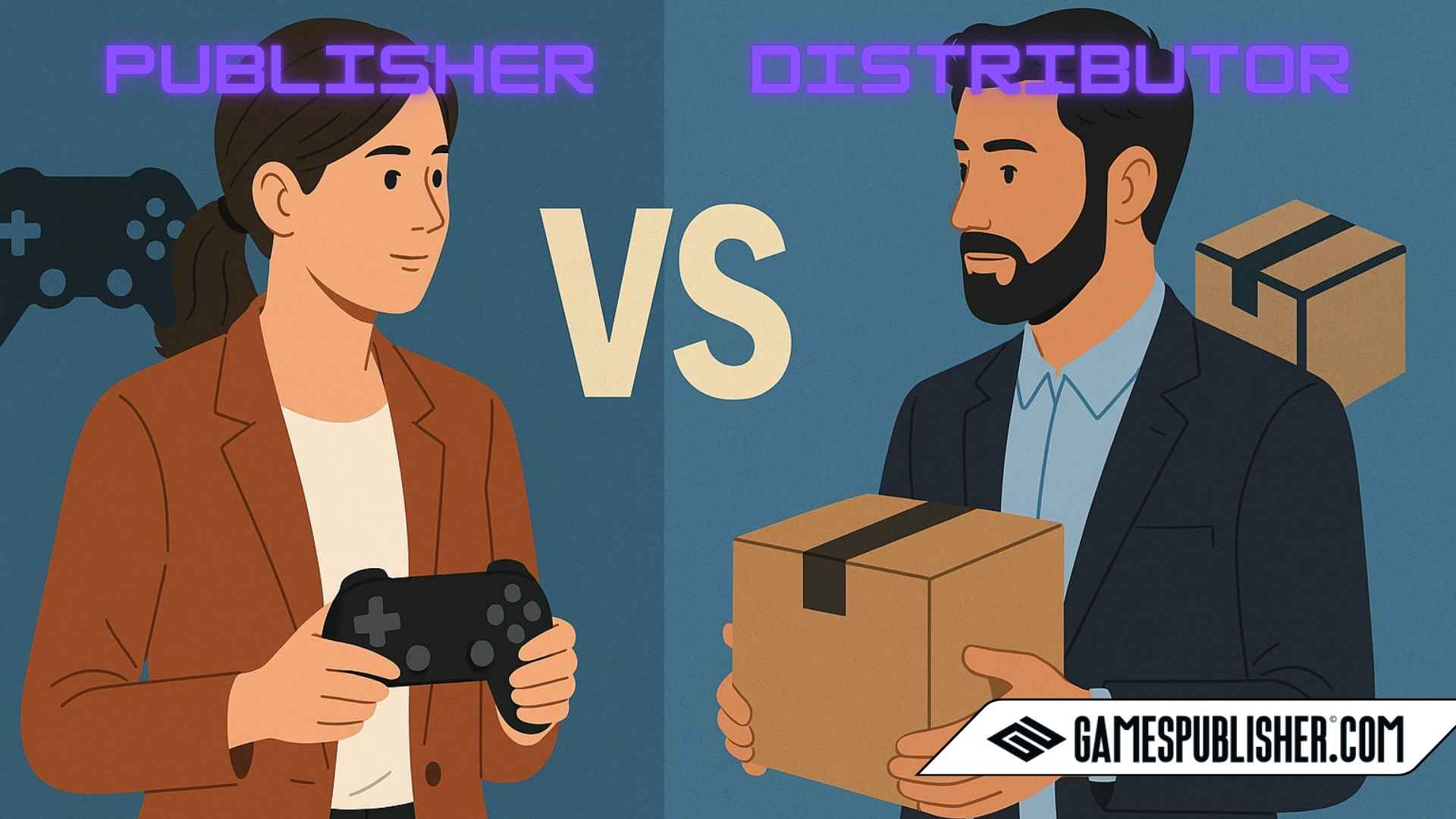
Understanding the difference between Publisher vs Distributor roles is important in the 2026 gaming industry, especially for indie developers, investors, and studios that want to launch games more successfully. Although both roles help bring a game to players, they do not handle the same responsibilities. A publisher usually supports funding, marketing, production, and business strategy. A distributor, on the other hand, focuses on making the finished game available through digital stores, console platforms, or physical retail channels.
Because the Publisher vs Distributor relationship can affect funding, marketing, platform access, and long-term revenue, developers need to understand these roles before signing agreements or choosing business partners. As a result, knowing the difference between a publisher and a distributor can help studios protect revenue, keep more creative control, and launch games more effectively.
In this updated 2026 Publisher vs Distributor guide, we will explain what publishers and distributors do, how their contracts work, and how each role affects game sales, visibility, and long-term success.
Publisher vs Distributor – Definition and Core Roles
The main difference between a publisher and a distributor is their role in the game lifecycle.
A game publisher helps prepare, fund, market, and launch a game. In many cases, publishers are involved before the game is finished. They may support development, manage marketing campaigns, offer quality assurance, and help the studio reach a larger audience.
A game distributor, however, helps deliver the finished game to players. Distributors focus on access, availability, storefront placement, physical copies, regional compliance, and platform delivery.
In simple terms, publishers help bring the game to market, while distributors help put the game in front of buyers.
What Does a Game Publisher Do?
A game publisher may handle several important tasks, including:
- Funding or co-funding game development
- Planning and running game marketing campaigns
- Managing press outreach and influencer promotions
- Supporting trailers, store pages, and launch announcements
- Helping with QA testing, localization, and production timelines
- Advising on pricing, monetization, and platform strategy
- Negotiating with console platforms or storefronts
- Supporting legal, licensing, and IP-related matters
Because of these responsibilities, publishers can have a major impact on how successful a game becomes. However, the level of involvement depends on the contract, the publisher, and the needs of the developer.
What Is a Game Distributor?
A game distributor focuses on making the game available to players after it is ready for release. Instead of funding or shaping the game, distributors mainly handle access and delivery.
For digital games, distributors are often storefronts or platforms. For physical games, distributors may manage packaging, shipping, retail placement, and inventory.
What Does a Game Distributor Do?
A game distributor may handle tasks such as:
- Publishing the game on digital storefronts
- Managing access through platforms like Steam, GOG, Epic Games Store, PlayStation Store, Xbox Store, or Nintendo eShop
- Handling physical packaging and shipping
- Supporting regional ratings, age labels, and compliance
- Making sure players can purchase and download the game
- Managing storefront visibility, platform listings, and technical delivery
- Working with publishers to complete the release process
As a result, distributors are very important for reach. Even if a game is excellent, players still need a reliable way to find it, buy it, download it, or receive it physically.
Publisher vs Distributor: Key Responsibilities
Although publishers and distributors sometimes overlap, their main responsibilities are different. Therefore, developers should understand what each partner actually provides before signing any agreement.
| Area | Game Publisher | Game Distributor |
|---|---|---|
| Main Role | Funds, markets, and supports the game | Delivers the game to stores or platforms |
| Involvement Stage | Often involved before launch | Usually involved near or after launch |
| Marketing Support | Usually strong | Usually limited or platform-based |
| Funding | May provide development funding | Usually does not fund development |
| Platform Access | May help negotiate access | Provides access or manages delivery |
| Physical Copies | Sometimes coordinates | Often handles retail logistics |
| Creative Input | May influence direction | Usually has little creative input |
| Revenue Share | Often higher due to risk and support | Usually lower than publisher share |
| Best For | Developers needing funding, marketing, or launch support | Developers needing access and availability |
What Publishers Typically Do
If you’re looking into how to be a game publisher, these are the core responsibilities you’ll take on:
- Fund or co-fund development of the game.
- Design and execute game marketing campaigns: trailers, press coverage, influencer outreach.
- Manage production timelines, set milestones, and ensure delivery is on schedule.
- Provide QA and localization services to ensure game quality and global compatibility.
- Develop or advise on monetization strategies and pricing.
This is why partnering with a major game publisher like EA, Ubisoft, or Sony can be a game-changer for studios needing resources and visibility.
Many of the biggest video game publishers also assist with legal, licensing, IP protection, and platform negotiations.
What Publishers Typically Handle
Publishers are often involved in the bigger strategy behind a game. For example, they may help decide when to announce the game, how to position it, and which platforms to prioritize.
Funding and Development Support
First, publishers may provide financial support. This can help developers pay for staff, software, testing, art, music, localization, and production costs. In return, the publisher usually receives a share of revenue after release.
In some cases, the publisher may also provide milestone payments. This means the developer receives payments when certain development goals are completed.
Marketing and Public Visibility
Next, publishers often handle game marketing. This may include trailers, press releases, social media campaigns, influencer outreach, event showcases, and launch promotions.
This matters because strong marketing can help a game stand out in the crowded 2026 gaming market. Without marketing support, even a high-quality game may struggle to get attention.
QA, Localization, and Production Help
In addition, publishers may support QA testing and localization. QA helps identify bugs and performance issues, while localization helps prepare the game for players in different countries.
Because global launches can be complex, this support can make the release smoother and more professional.
Business Strategy and Platform Negotiations
Finally, many publishers help with platform strategy. For example, they may advise whether a game should launch on PC first, consoles first, or multiple platforms at the same time.
They may also help negotiate platform deals, subscription service placements, or promotional opportunities.
What Distributors Typically Handle
Distributors focus more on access than development. Therefore, they are usually involved once the game is close to release or already complete.
Digital Storefront Access
Digital distributors help make games available on storefronts such as Steam, GOG, Epic Games Store, PlayStation Store, Xbox Store, and Nintendo eShop.
For indie developers in 2026, these platforms are essential because they provide direct access to players. However, each platform has its own requirements, fees, rules, and review process.
Physical Distribution
Although digital sales dominate many parts of the gaming market, physical distribution still matters for collectors, console releases, and special editions.
Physical distributors may handle manufacturing, packaging, shipping, retail placement, and inventory management. For example, companies that specialize in limited physical releases can help indie games reach collectors who prefer boxed copies.
Regional Compliance
Distributors may also help with compliance. This can include ratings such as ESRB, PEGI, or other regional age-rating systems. In addition, packaging, language support, and platform rules may need to be adjusted depending on the target market.
Because these requirements vary by region, distributor support can reduce launch problems.
Revenue Models and Contracts
The revenue models and business arrangements differ significantly between publishers and distributors.
Publisher Revenue Models
Game publishing typically involves:
- Revenue share agreements: The publisher takes a percentage of game sales.
- Milestone payments: Developers get paid when they hit development goals.
- IP ownership clauses: Publishers may retain or share IP rights depending on the contract.
Larger publishers may invest heavily upfront, expecting higher returns over time, while indie game publishers often opt for more developer-friendly terms.
Distributor Contracts
Distributors, by contrast, work on:
- Fixed-fee models: Especially in physical distribution.
- Percentage-based commissions: Usually lower than publishers, as they handle fewer high-risk tasks.
- Some digital stores like Steam take a 30% cut per sale — essentially acting as a distribution platform with baked-in marketing features.
A developer working with both a publisher and distributor might end up sharing revenue between all parties, which makes contract negotiation critical.
Publisher vs Distributor: Revenue Models and Contracts
Revenue models are another major difference in the Publisher vs Distributor comparison. Since publishers often take more risk, they usually receive a larger share of revenue than distributors.
Publisher Revenue Models
Game publishing agreements may include:
- Revenue share between the developer and publisher
- Recoupment, where the publisher earns back its investment first
- Milestone payments during development
- Marketing budget agreements
- IP ownership terms
- Platform exclusivity terms
- Long-term support or sequel rights
Because these agreements can affect a developer’s future, contract review is very important. A strong publishing deal can help a game succeed. However, a poor deal can reduce creative control, limit revenue, or create long-term ownership issues.
Distributor Revenue Models
Distributor agreements are usually simpler. They may include:
- Platform commission fees
- Fixed distribution fees
- Physical production and shipping costs
- Storefront revenue share
- Regional distribution costs
For example, many digital storefronts take a percentage of each sale. While this reduces the developer’s revenue per copy, the platform also provides access to a large player base.
Therefore, developers should calculate both publisher and distributor fees before estimating profit.
Publisher vs Distributor: Real-World Examples
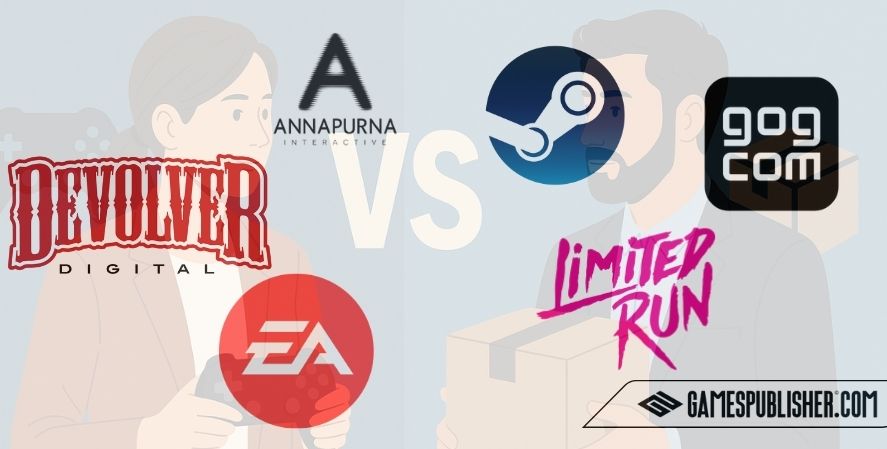
Real-world examples make the Publisher vs Distributor difference easier to understand. Some companies focus on funding, marketing, and development support, while others focus mainly on platform access, storefront delivery, or physical distribution.
Electronic Arts
Electronic Arts is one of the largest video game publishers in the world. It is known for major franchises across sports, action, racing, and simulation genres. Because of its size, EA can provide large-scale funding, marketing, platform support, and global distribution coordination.
Devolver Digital
Devolver Digital is known for publishing indie games with strong creative identities. The company often works with unique, bold, and unconventional games. As a result, it has become a respected name among indie developers and players.
Annapurna Interactive
Annapurna Interactive is another publisher known for story-driven and creative indie games. Titles associated with Annapurna often receive strong press attention and critical recognition, which shows how publisher branding can influence visibility.
Real-World Examples of Game Distributors
Distributors help players access games through digital or physical channels. In many cases, modern platforms act as both storefronts and distribution systems.
Steam
Steam is one of the most important digital distribution platforms for PC games. Developers can release games through Steam and reach a large global audience. Additionally, Steam offers store pages, wishlists, user reviews, community features, and seasonal sales.
GOG
GOG is known for DRM-free digital distribution. It is popular among players who prefer owning games without strict digital rights management. Because of this positioning, GOG appeals to a specific audience of PC gamers.
Limited Run Games
Limited Run Games focuses on physical releases, especially for indie and niche titles. This type of distribution is useful for developers who want collector editions or physical copies without managing manufacturing and shipping alone.
Example: How Publishers and Distributors Work Together
To understand the relationship better, imagine an indie studio developing a story-driven adventure game.
First, the studio partners with a publisher. The publisher provides funding, helps with marketing, manages press outreach, and supports QA testing. As a result, the studio can focus more on development while still preparing for a strong launch.
Next, the finished game launches on Steam, PlayStation Store, and Nintendo eShop. These platforms act as distributors because they allow players to purchase and download the game.
Finally, the publisher and developer share revenue based on their contract, while each distribution platform takes its own commission. Therefore, the final revenue is affected by both the publishing deal and the distribution method.
Do You Need a Publisher, a Distributor, or Both?
The answer depends on your game, budget, team size, and goals. Some developers need full publishing support, while others only need access to distribution platforms.
Choose a Publisher If:
- You need development funding
- You need marketing support
- You want help with trailers, PR, or influencer outreach
- You need QA, localization, or production support
- You want help reaching console platforms
- You lack business or launch experience
A publisher can be helpful if your game has strong potential but your team needs support to bring it to market.
Choose a Distributor If:
- Your game is already funded
- Your team can handle marketing
- You only need platform access
- You want to self-publish
- You want to keep more control over revenue and creative decisions
- You only need physical production or retail logistics
A distributor may be enough if your team already has a clear launch plan and does not need deep business support.
Choose Both If:
- You want publisher support and broad platform reach
- You plan to launch in multiple regions
- You want both digital and physical availability
- You need marketing, funding, and platform delivery
- You are launching a larger commercial title
In many cases, publishers and distributors work together. However, developers should still understand who is responsible for each part of the launch.
Red Flags Developers Should Watch For in 2026
Before signing with a publisher or distributor in 2026, developers should review the agreement carefully. Although partnerships can be valuable, some deals may create problems later.
Watch out for:
- Publishers that demand full IP ownership without fair support
- Unclear revenue share terms
- Vague marketing promises
- Hidden fees or unexpected distribution costs
- No clear reporting on sales and engagement statistics
- Long contract terms with limited developer control
- Lack of transparency around platform relationships
- Poor communication during negotiation
Most importantly, developers should speak with a legal expert before signing. A contract can affect not only one game but also future sequels, ports, updates, and brand ownership.
How Publishers Affect Game Success
A strong publisher can improve a game’s chances of success in several ways. First, publishers can increase visibility through press coverage, trailers, influencer campaigns, and platform promotions. Next, they can help improve quality through QA, localization, and production management. Finally, they can guide pricing, launch timing, and long-term marketing strategy.
Because discoverability is one of the biggest challenges in the 2026 gaming industry, publisher support can be valuable. However, the publisher must understand the game’s audience and genre. Otherwise, marketing may not reach the right players.
How Distributors Affect Game Success
Distributors affect success by controlling where and how players can access the game. For example, a game available on multiple platforms has more opportunities to reach players. Similarly, a physical release can attract collectors and fans who prefer boxed editions.
In addition, digital platforms can influence visibility through wishlists, reviews, recommendations, and seasonal sales. Therefore, distribution is not only about access. It can also affect long-term sales performance.
The Evolving Future of Publishers and Distributors in 2026
The line between publishers and distributors is becoming less clear in 2026. Today, some platforms offer storefront access, marketing tools, funding programs, and publishing support. At the same time, some publishers now provide direct distribution help through platform relationships.
For example, digital stores may offer self-publishing tools, analytics, promotional events, and community features. Meanwhile, indie publishers may help developers access storefronts, improve store pages, and coordinate launch timing.
Because of this shift, developers now have more options than ever. They can work with a traditional publisher, self-publish through digital platforms, use a distributor, or combine several approaches.
Conclusion: Know the Difference, Make Better Decisions
Understanding Publisher vs Distributor roles helps developers make smarter business decisions in the 2026 gaming industry. Although both roles support a game’s success, they serve different purposes.
A publisher helps fund, market, manage, and position a game for success. Meanwhile, a distributor helps make the game available through digital platforms, console stores, or physical retail channels.
Therefore, developers should choose based on their actual needs. If you need funding, marketing, QA, and launch support, a publisher may be the better choice. However, if your game is already complete and you only need platform access, a distributor may be enough.
Before making a decision in 2026, review your budget, marketing skills, creative goals, and long-term revenue plans. By understanding the difference between a publisher and a distributor, you can protect your game, choose better partners, and build a stronger path to market.
For more insights on game publishing, distribution, and developer growth, visit Gamespublisher.com.
Loading survey...