
Understanding the steps in game development is essential for developers, studios, and publishers in 2026. Whether you are creating a small indie game or managing a larger commercial project, each stage helps turn a simple concept into a playable, polished, and market-ready release.
However, game development is not just about coding or art creation. It also includes planning, prototyping, testing, marketing, publishing, and post-launch support. Because of this, skipping an important phase can lead to delays, budget problems, poor player feedback, or a weak launch.
In this updated 2026 guide from Gamespublisher.com, we’ll break down the key steps in game development from concept to launch. We’ll also explain where each phase fits, what tools can help, and how developers can avoid common mistakes during the game development process.
Steps in Game Development from Concept to Launch
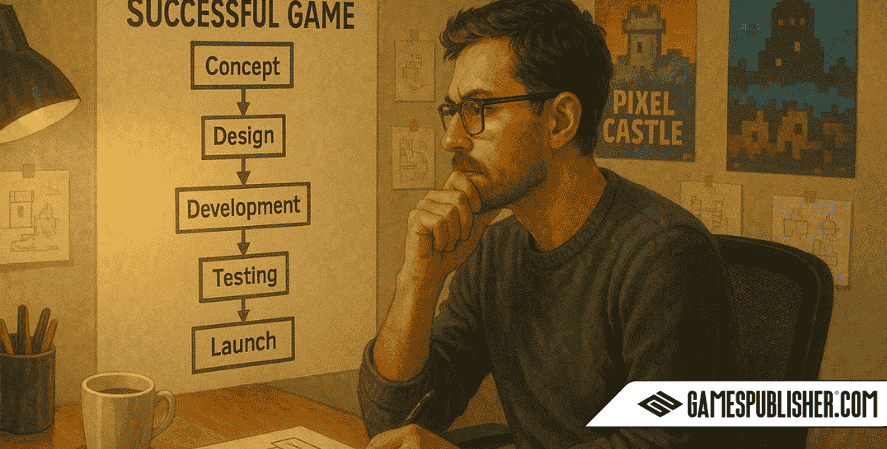
The steps in game development follow a clear process, but every project may move through these stages differently. For example, an indie team may move quickly from prototype to launch, while a larger studio may spend months on pre-production before full development begins.
Even so, most successful games follow the same core path: concept, planning, prototyping, production, testing, marketing, publishing, and post-launch support. Therefore, understanding this structure can help developers stay organized, reduce risks, and make better decisions throughout the entire game development cycle.
Quick Overview of the Game Development Process
Before going deeper into each phase, it helps to understand the full workflow. The steps in game development usually follow this order:
| Stage | Main Goal |
|---|---|
| Concept | Build the core idea and define the game’s purpose |
| Game Design Document | Turn the idea into a clear development plan |
| Prototype | Test the main mechanics before full production |
| Production | Build the game’s art, code, levels, audio, and systems |
| QA Testing | Find bugs, balance gameplay, and improve performance |
| Marketing | Build awareness before launch |
| Publishing | Release the game on the right platforms |
| Post-Launch Support | Fix issues, add updates, and keep players engaged |
This overview gives developers a simple roadmap before they begin. As a result, each step becomes easier to manage and track.
Step 1 – Conceptualization: The First Phase in Game Development
Conceptualization is the first phase in the steps in game development because every successful project starts with a strong idea. At this stage, developers define the game’s core concept, target audience, genre, gameplay hook, and unique selling point.
Instead of rushing into production, teams should first ask important questions. What type of game are we building? Who is it for? Why would players choose it over similar games? By answering these questions early, developers can avoid confusion later in the process.
Key Activities in Conceptualization:
- Brainstorm Creatively: Use prompts, team discussions, or sketchbooks to generate ideas.
- Choose a Game Genre Wisely: Popular video game genres include puzzle, RPG, and survival. Each comes with unique expectations.
- Research the Market Thoroughly: Analyze the most successful video game titles and most successful indie games to identify trends.
- Define a Unique Selling Proposition (USP): Ask yourself what makes this game different?
As a result, you’ll start to see your vision come into focus. Moreover, having a clear concept early on will make all future steps more efficient.
Pre-Production: The Planning Stage Many Developers Skip
Pre-production is one of the most important but often overlooked stages in game development. During this phase, the team reviews the concept, estimates the budget, assigns roles, chooses tools, and confirms the production timeline.
This stage may include:
- Technical planning
- Team role assignments
- Budget estimates
- Platform decisions
- Art style tests
- Gameplay scope review
- Risk assessment
Although pre-production may feel slow, it helps prevent expensive mistakes later. Therefore, developers should use this stage to confirm that the game idea is realistic before moving into full production.
Step 2 – Building a Game Design Document (GDD) to Guide Your Vision
Once your idea feels solid, the next step is turning it into a clear plan. At this point, the Game Design Document (GDD) becomes an essential planning tool. Essentially, it acts as a blueprint for your entire team.
A Strong GDD Should Include:
- Game Mechanics: How players move, interact, and progress.
- Narrative and Characters: Who are they? What’s the story?
- Art and Sound Guidelines: Define style, tone, and atmosphere.
- User Interface and Experience Design: Strong UI and UX help make the gameplay smoother and more user-friendly.
- Monetization Strategy: Will it be premium, freemium, or ad-supported?
- Target Platforms: Decide if your game is for PC, mobile, console or all three.
Furthermore, this document keeps everyone aligned and minimizes confusion later in the game development cycle.
Step 3 – Prototyping: Testing Ideas in the Game Development Process
Before full development begins, it’s wise to create a simple prototype. This allows you to test your game’s core mechanics without wasting resources.
Tools Commonly Used for Prototyping:
- Unity: Ideal for 2D and 3D games across platforms.
- Unreal Engine: Great for high-quality visuals and effects.
- Godot: A free, open-source engine growing in popularity.
In addition, this stage is a good time to experiment with features like ai npc behavior or basic generative AI in game development. By doing so, you can ensure the gameplay is both functional and fun before investing more time.
Step 4 – Production: The Heart of the Game Development Cycle
At this point, the real building begins. This phase involves multiple departments working together to create a playable game.
Key Aspects of Production:
- Programming: Developers write the logic behind the game.
- Art Creation: Designers make characters, objects, and environments.
- Animation and Sound Design: These elements add life to your world.
- UI and UX Development: Clean menus and interfaces matter. Strong ui and ux design keeps players engaged.
- Integration: Assets are imported into the game engine and made functional.
Meanwhile, it’s crucial to maintain strong communication between teams. Therefore, using project management tools like Trello or Jira is highly recommended.
Step 5 – Quality Assurance: Testing the Game Thoroughly
Quality assurance is one of the most important steps in game development because bugs, crashes, and balance issues can damage the player experience. Even if the game has a strong concept, poor performance can lead to negative reviews after launch.
Therefore, testing should not be saved until the final week. Instead, developers should test throughout production so they can find problems early, improve gameplay feel, and prepare the game for a smoother release.
Types of QA Testing:
- Unit Testing: Individual components are tested on their own.
- Integration Testing: Ensures different systems work together smoothly.
- Alpha Testing: Conducted within the team, this testing phase uncovers key issues early in development.
- Beta Testing: External testers provide feedback in real-world scenarios.
Additionally, games with complex systems, such as those involving ai npc game mechanics, need extra attention. In conclusion, good QA leads to higher player satisfaction and fewer post-launch complaints.
Store Page Preparation Before Launch
Before publishing the game, developers should prepare their store page carefully. A strong store page can improve wishlists, conversions, and launch visibility.
Important store page elements include:
- Clear game title
- Strong short description
- Gameplay-focused screenshots
- A professional trailer
- Accurate tags and categories
- System requirements
- Release date information
- Community links
For example, a Steam page should be prepared early so players can wishlist the game before launch. As a result, marketing efforts become more effective because interested players have a place to follow the project.
Step 6 – Game Marketing and Community Building
Contrary to popular belief, marketing doesn’t start after the game is finished. In fact, promoting your game early can build hype and attract valuable feedback.
Effective Marketing Strategies:
- Social Media Campaigns: Share art, devlogs, and updates.
- Community Engagement: Start a Discord or subreddit.
- Influencer Outreach: Let streamers test early builds.
- Press Kits and Trailers: These help gain coverage on websites and YouTube.
- Steam Page Optimization: Use tags and keywords smartly.
As a result, your game will have an audience before it even launches. Also, studying past video game marketing and game marketing campaigns can reveal best practices to follow.
Step 7 – Publishing and Distribution: Releasing Your Game to the World
Now it’s time to bring your game to market. This phase involves choosing where and how to publish your title.
Publishing Options:
- Self-Publishing: Offers more control but requires handling everything.
- Partnering with Game Publishers: A video game publisher can handle distribution, legal, and marketing.
Distribution Platforms Include:
- Steam and Epic Games Store for PC
- App Store and Google Play for mobile
- Xbox, PlayStation, and Nintendo eShop for console
Moreover, working with video game publishers can be a strategic move for studios looking to scale. Therefore, consider both the pros and cons carefully.
Step 8 – Post-Launch Support: Sustaining Success Beyond Release
Finally, launching the game is not the last step. Ongoing support keeps players engaged and loyal.
Post-Launch Activities:
- Patching and Bug Fixes: Solve problems as they arise.
- Content Updates and DLCs: Add value with seasonal content.
- Community Feedback: Engage players and adjust accordingly.
Additionally, offering timely updates can help increase longevity and build a strong brand. As a result, your player base remains active and invested.
Common Challenges in the Game Development Process
Even with the best planning, challenges can arise. Fortunately, knowing what to expect can help you handle these issues more effectively.
Time and Budget Overruns in Game Development
Game projects frequently exceed both time and budget expectations.
Why It Happens:
- Poor Estimation: Teams often underestimate how long tasks will take.
- Feature Creep: New features are added mid-development.
- Unexpected Bugs: Fixing one issue sometimes creates others.
Therefore, sticking to your original scope and setting realistic deadlines is key.
Communication Problems in Development Teams
Miscommunication is one of the top reasons projects fall behind schedule.
How to Fix It:
- Use tools like Slack, Trello, or Jira.
- Hold weekly stand-ups to align teams.
- Keep the Game Design Document updated for reference.
Furthermore, clearly defining roles and responsibilities can eliminate confusion early on.
Market Misalignment: A Hidden Risk in Game Development
Creating a game that no one wants is a risk all developers face.
Ways to Stay Aligned with the Market:
- Monitor trends in game genres and video game genres.
- Look at what helped the most successful indie games stand out.
- Use surveys and community polls for direct feedback.
In contrast to chasing trends blindly, aim to strike a balance between originality and familiarity.
Tools That Simplify the Steps in Game Development from Concept to Launch
Modern tools can make the steps in game development easier to manage, especially for small teams with limited time and resources. However, tools should support the workflow instead of replacing proper planning.
For best results, developers should choose tools based on project size, team skill level, target platforms, and production needs. In addition, using the right tools early can reduce communication problems, prevent file loss, and speed up testing.
Game Engines and Frameworks for Streamlined Development
Selecting the most suitable game engine can greatly influence your project’s outcome.
Top Engines:
- Unity: Versatile and beginner-friendly.
- Unreal Engine: Best for cinematic experiences.
- Godot: Lightweight and free.
- RPG Maker: Great for 2D narrative games.
Moreover, many engines support features like artificial intelligence for games, including tools for ai npc development and procedural content.
Project Management Tools for Organized Development
Staying organized is half the battle.
Recommended Tools:
- Trello: Visual boards for simple project tracking.
- Jira: Enterprise-grade software for large teams.
- HacknPlan: Designed specifically for game development workflows.
Additionally, these tools reduce miscommunication and help you stay on schedule.
Version Control Systems: Protecting Your Game Assets
Backing up your work and managing code changes is essential.
Best Options:
In addition to preventing data loss, version control allows multiple game developers to collaborate efficiently.
Case Study: How Indie Devs Apply the Steps in Game Development from Concept to Launch
To illustrate how these steps work in practice, let’s look at a real example from a small indie team.
The Team:
- 4 members: programmer, artist, writer, and audio designer
- Tools: Unity, Trello, GitHub
Timeline Breakdown:
- Month 1–2: Concept creation and market research
- Month 3: Game Design Document completed
- Month 4–8: Built a prototype and began production
- Month 9: Beta tested with early community access
- Month 10: Marketed via Twitter, Discord, and YouTube
- Month 11: Launched on Steam
- Month 12+: Rolled out DLC and support updates
In summary, by following each step carefully, the team minimized risks and maximized results.
Frequently Asked Questions
The main steps in game development include concept creation, game design documentation, prototyping, production, quality assurance, marketing, publishing, and post-launch support. Each step helps move the game closer to a polished release.
A Game Design Document is important because it keeps the team aligned. It explains the game mechanics, story, art direction, platforms, monetization strategy, and production goals.
Game marketing should begin before launch, not after the game is finished. For example, developers can start with devlogs, screenshots, social media posts, Discord communities, trailers, and Steam wishlist campaigns.
Prototyping helps developers test core mechanics before spending too much time or money on full production. As a result, teams can identify weak ideas early and improve the gameplay faster.
After launch, developers usually provide patches, bug fixes, content updates, DLC, community support, and performance improvements. This stage helps keep players engaged and improves long-term success.
Yes. Indie developers can follow the same basic process, but on a smaller scale. However, they may use simpler tools, shorter timelines, and smaller teams.
Conclusion: Why the Steps in Game Development from Concept to Launch Matter
Understanding the steps in game development gives developers a clear roadmap from concept to launch. Instead of treating game creation as one large task, this process breaks development into manageable stages, including planning, prototyping, production, testing, marketing, publishing, and post-launch support.
In 2026, this structure is more important than ever because the gaming market is highly competitive. Developers need strong ideas, organized workflows, early marketing, and reliable testing to stand out. Therefore, following each stage carefully can help reduce delays, improve quality, and increase the chance of a successful launch.
Whether you are building your first indie game or preparing a larger release, use these steps as a practical guide. With the right planning, tools, and publishing strategy, your game can move from a simple idea to a finished product players are excited to experience.
For more game development, publishing, and launch strategy guides, visit Gamespublisher.com.
Loading survey...