

Idle games have changed a lot. They are no longer only about clicking one button and watching a number rise. Many newer games mix idle progress with RPG systems, farming, automation, strategy, and desktop play.
That is good news for players. You can still enjoy steady upgrades and bigger numbers, but you now have more ways to play. Some games run quietly while you work. Others ask you to make builds, change formations, manage resources, or plan each reset.
For developers and publishers, this change is also useful to study because it reflects broader trends in game development and publishing. Idle games show how a simple loop can grow into a deep system when upgrades, automation, rewards, and new goals arrive at the right time.
These ideas also matter throughout the game development process, where developers test core mechanics, progression, balance, and player feedback before and after launch.
This guide focuses on new and recent Steam idle games that are still worth playing in 2026. It starts with two 2026 releases, then looks at recent standouts and a few classics that helped shape the genre.
Best New Idle Games on Steam in 2026
The word “idle” now covers many types of games. Some are mostly passive. Some need regular input. Others sit in the middle.
Before choosing a game, think about how much attention you want to give it. Do you want something that can run while you work? Or do you want a game that uses idle systems but still gives you many choices?
Here are the strongest new and recent options to consider.
Orc Incremental
- Release date: September 8, 2026
- Developer: Nice Ride
- Publisher: Playsaurus
- Type: Incremental auto battler
- Best for: Players who like army builds, upgrades, automation, and resets
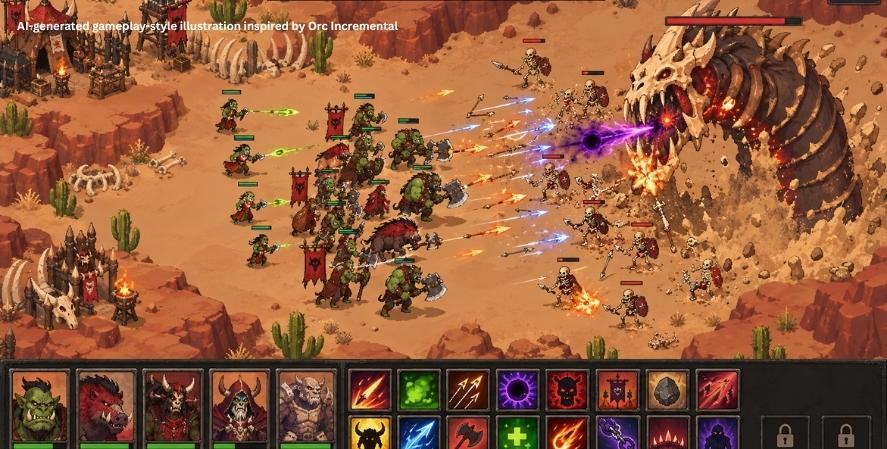
Orc Incremental is one of the newest idle games on Steam in 2026. It starts with a simple idea: build an orc army and make it stronger.
The game is not only about waiting for numbers to rise. You draft units and totems, set your formation, and decide how your army should fight. Your units battle on their own, but your choices still matter.
You can also use spells during hard fights. That gives the game a more active side than many passive idle games.
How Progression Works
As your army grows, you unlock more ways to improve it. New units fill different roles. Totems add passive effects. Better formations can help you break through a difficult wave.
When progress slows down, you can use Dark Rebirth. This resets part of your run but gives you permanent bonuses. It can also unlock more units and challenges.
The game also supports offline progress. That means you can close it, return later, and collect gold earned while you were away.
Why Orc Incremental Stands Out
Its main strength is the mix of idle growth and tactical choices. You are not only buying the next upgrade. You are also deciding which units work well together and how to arrange them.
This makes Orc Incremental a good choice for players who want an idle game with more strategy than a basic clicker.
Desktop Detective
- Release date: August 19, 2026
- Developer: Conradical Games
- Publisher: Playsaurus
- Type: Desktop idle RPG
- Best for: Players who want a game that can run beside work, browsing, or another task
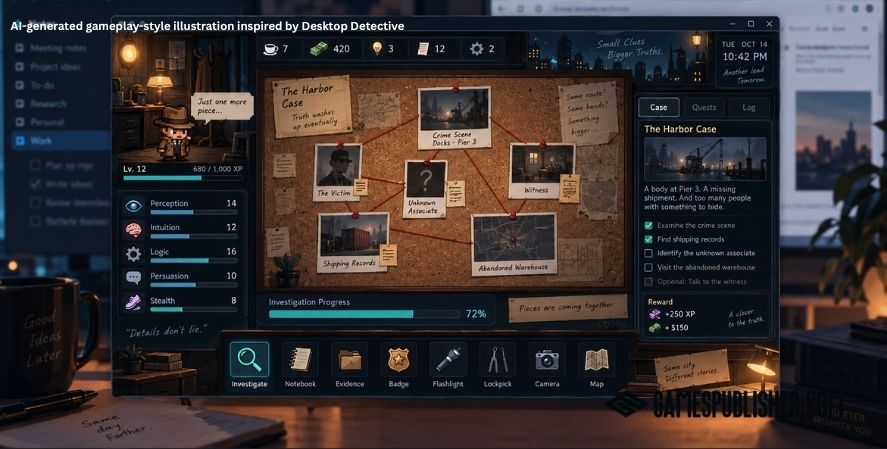
Desktop Detective is another true 2026 release. It is built to sit in a small part of your screen while you do other things.
Instead of running a farm or factory, you investigate crime scenes. You collect clues, gain XP, improve stats, and find gear. You can also unlock new crime scenes as you level up.
The game can stay small and out of the way, which makes it different from a normal full-screen RPG.
A Detective Game That Lives on Your Desktop
Desktop Detective works because the theme fits the format. You can check a crime scene, make a few changes, then return to your main task.
Progress can be passive, but you can also play more actively. The game lets you adjust its size and position, so you can decide how much screen space it uses.
Gear adds another layer. Better items can change your stats and help you create stronger builds.
Ascension Adds Long-Term Progress
The game also uses an ascension system. You can reset a run to earn Ascendium, which supports upgrades that carry across ascensions.
That makes each reset more useful. You lose short-term progress, but you gain a stronger base for the next run.
Desktop Detective is a good example of how idle games can move beyond simple resource counters. It combines a desktop companion format with RPG growth, gear, and investigation.
Rusty’s Retirement
- Release date: April 26, 2024
- Developer: Mister Morris Games
- Publisher: Mister Morris Games
- Type: Idle farming and desktop companion
- Best for: Relaxed players who want light check-ins during work or browsing
Rusty’s Retirement is not a 2026 release, but it still feels modern because of how it uses the desktop.
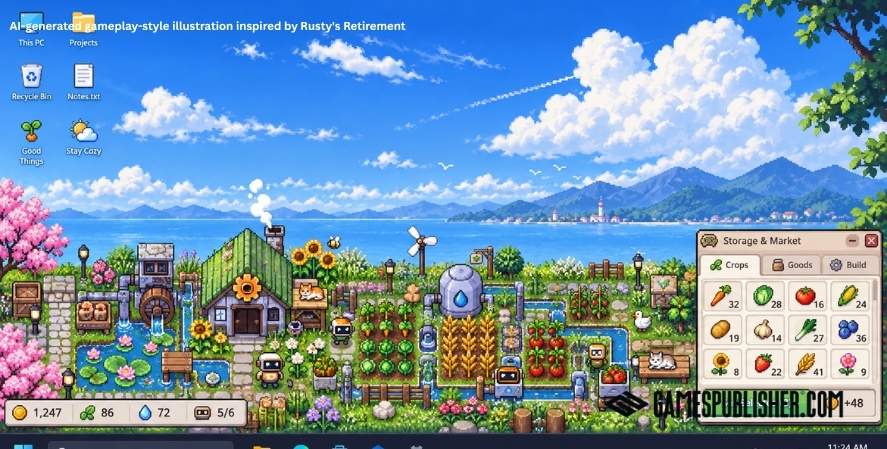
The farm sits at the bottom of your screen. You can plant crops, produce biofuel, expand the farm, and automate jobs with robots.
You do not need to give it your full attention. That is the main appeal.
Why the Desktop Format Works
Farming already has a natural wait cycle. You plant something, let it grow, then come back to harvest it.
Rusty’s Retirement uses that rhythm well. The game can keep moving while you answer messages, watch a video, or work in another app.
Robots can also handle jobs such as planting, watering, and harvesting. As automation improves, you spend less time on basic tasks and more time deciding what to build next.
The game also has a vertical mode, which lets the farm sit on the side of your screen instead.
Rusty’s Retirement is a strong pick if you want a calm idle game rather than a fast race toward huge numbers.
Magic Research 2
- Release date: May 21, 2024
- Developer: Maticolotto
- Publisher: Maticolotto
- Type: Incremental RPG
- Best for: Players who want magic, combat, crafting, and deeper planning
Magic Research 2 shows how much depth an incremental game can have.
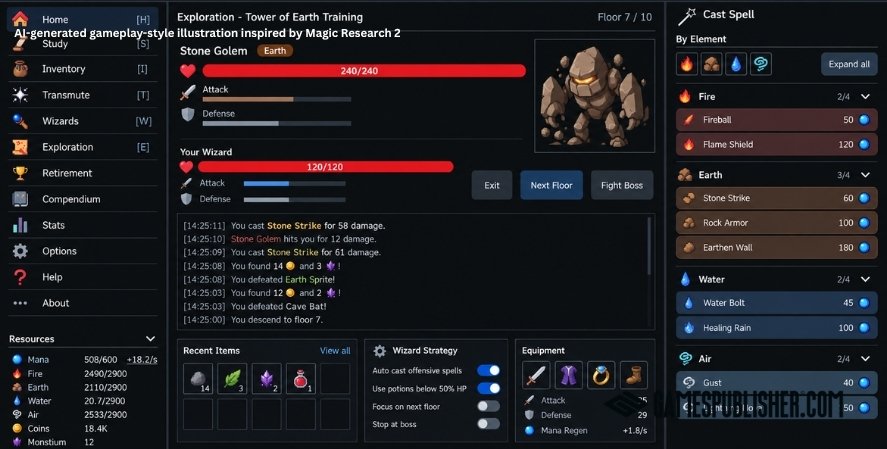
You play as a wizard searching for the Philosopher’s Stone. Along the way, you learn spells, manage resources, fight enemies, craft items, and build a team of wizards.
The game includes more than 120 spells, so there are many ways to shape your progress.
More RPG Than Basic Clicker
Magic Research 2 is not a game where you only wait for a bar to fill. You make many choices.
Spells can create resources, improve combat, or change how your build works. Crafting gives you more ways to prepare for harder parts of the game. Your team of wizards can also cast spells for you, which adds automation.
This makes the game a good fit for players searching for an idle RPG with more active decision-making.
It is also a useful example of good progression design. The game can introduce one system, let you learn it, then add another layer later.
(the) Gnorp Apologue
- Release date: December 14, 2023
- Developer: Myco
- Publisher: (Myco)
- Type: Strategic incremental game
- Best for: Players who enjoy builds, synergies, and unusual systems
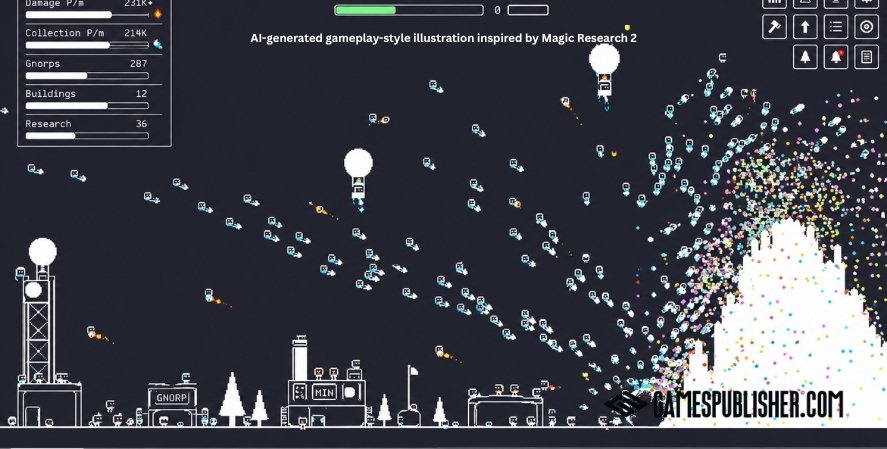
(the) Gnorp Apologue begins with a strange but simple goal: hit a rock and collect the shards that come from it.
Those shards are the main resource. You use them to get more gnorps, build structures, and improve the systems that create and collect shards.
The idea sounds simple, but the game becomes much more complex over time.
Build Choices Matter
Different gnorps use different ways to create or collect shards. Some use direct force. Others use weapons, flowers, psychic powers, rockets, or drones.
You can also improve units, structures, and special systems. That means progress depends on more than buying a larger multiplier.
The fun comes from finding combinations that work well together.
This makes (the) Gnorp Apologue a good choice for players who like experimenting with builds. It keeps the basic joy of an incremental game while giving you more control over how progress happens.
Sixty Four
- Release date: March 4, 2024
- Developer: Oleg Danilov
- Publisher: Playsaurus
- Type: Incremental factory and automation game
- Best for: Players who enjoy discovery, production chains, and systems that grow over time
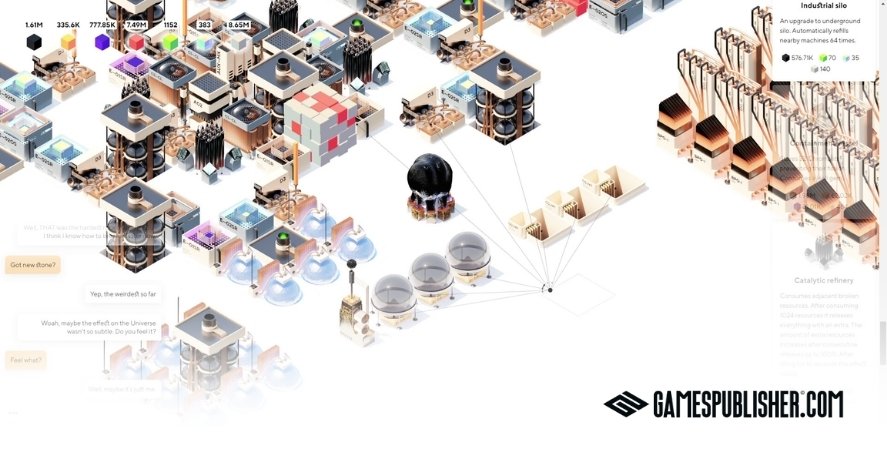
Sixty Four starts small and then keeps adding new layers.
At first, you work with simple machines and resources. Later, you unlock more machines, new materials, and new problems to solve.
The game becomes more idle as you unlock machines, with full automation as a long-term target.
Simple Systems Become More Complex
One of the best parts of Sixty Four is discovery. The game does not need to show every system at once.
You learn one idea, use it for a while, then meet a new mechanic that changes how your setup works.
That can make progress feel more rewarding than simply buying the same upgrade again and again.
Sixty Four is a strong pick for players who like idle games but also enjoy factory planning and resource management.
Nodebuster
- Release date: August 13, 2024
- Developer: Goblobin
- Publisher: Goblobin
- Type: Short experimental incremental game
- Best for: Players who want a compact game with fast growth
Nodebuster is a useful reminder that an incremental game does not need to last forever.
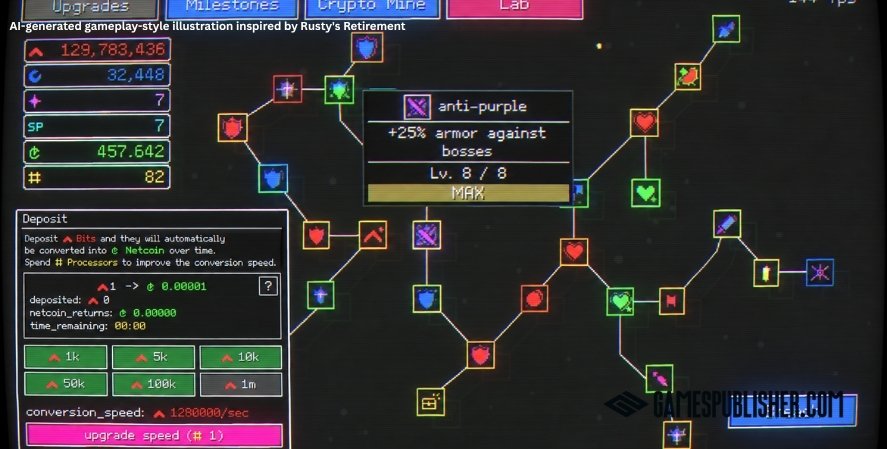
The game is built around breaking nodes, collecting resources, and spending those resources on upgrades. It also includes an upgrade skill tree.
Its main difference is scope. It is designed as a short experimental incremental game.
A Shorter Idle Experience Can Be a Good Thing
Many idle games are designed to keep going for months or even years. Nodebuster takes another path.
A shorter game can make each upgrade feel more focused. It can also give the player a clear sense of completion.
That can be refreshing if you like fast growth but do not want another game that asks for daily attention.
For developers, this is also a useful lesson. Long retention can be valuable, but a shorter and more focused progression curve can still leave a strong impression.
What Makes New Idle Games Different Today?
Modern idle games often mix incremental progress with another genre.
The old loop was usually simple:
Click → earn currency → buy upgrades → automate
Many newer games add more steps:
Explore → choose → build → optimize → automate → unlock → change strategy
The numbers still grow, but the player has more control over how that growth happens.
Idle Games Are Moving Beyond Clicking
Clicking is still useful because the result is easy to understand. You press a button and see a number change.
However, many new idle games use clicking only as the first step.
Later, automation handles the basic action. The player then focuses on larger choices, such as builds, upgrades, production, or team setup.
This is why idle games now overlap with RPGs, farming games, strategy games, and automation games.
Good Automation Should Change Your Role
Automation is more interesting when it changes what you do.
At first, you may perform one task by hand. Later, the game handles that task for you.
Now you can focus on a bigger problem.
For example, you may stop clicking for resources and start deciding where those resources should go. Later, you may stop managing one machine and start planning a whole production chain.
Good automation saves time, but it also gives you new decisions.
Desktop Idle Games Are Growing
Desktop Detective and Rusty’s Retirement show why desktop games work so well with idle systems.
They do not need your full attention. They can stay in a corner or along the edge of the screen while you do something else.
The hard part is balance.
If nothing happens for too long, checking the game can feel pointless. If the game asks for constant attention, the desktop format becomes distracting.
The best desktop idle games make a return feel rewarding without making a short absence feel like a mistake.
How to Choose an Idle Game on Steam
There is no single best idle game for everyone. The right choice depends on how you want to play.
Decide How Active You Want to Be
You can think of idle games in three simple groups.
Active incremental games ask for regular choices. You may change builds, buy upgrades, manage resources, or control combat.
Hybrid idle games can run on their own for a while, but regular check-ins still help.
Passive idle games focus more on unattended progress and short visits.
If you want a game during work, a hybrid or passive title may fit better. If you want to sit down and play for hours, an active incremental game may be more fun.
Check Offline Progress
Offline progress can make a big difference.
Some games keep earning resources while they are closed. Others limit offline gains. Some need to stay open for progress to continue.
Check the Steam page, patch notes, or recent player discussions before you buy. This feature can change how well a game fits your routine.
Look Beyond the Idler Tag
Steam uses user-defined tags, so genre labels are not always exact.
A game may fit the idle audience even if “Idler” is not its main tag.
Useful tags include Incremental, Clicker, Automation, Resource Management, Casual, RPG, Farming Sim, and Desktop Companion.
Searching across several tags can help you find games that match the type of progression you want.
Premium or Free-to-Play?
Both models can work.
A premium game usually has an upfront price. A free-to-play game may use optional purchases, boosts, extra content, or convenience features.
The important question is whether the normal progression feels good without spending more than you want.
In an idle game, pacing is a large part of the design. If progress becomes slow only to push purchases, the monetization system can affect the whole experience.
Why Idle Games Matter to Developers and Publishers
Idle games are useful to study because their feedback loops are easy to see.
A player does something. The game gives a reward. The player buys an upgrade. The next action becomes stronger.
That clear link between action and reward can teach lessons that apply to many genres, especially when developers think carefully about game elements such as mechanics, progression, feedback, and rewards.
Fast Feedback Helps Players Understand Progress
Early progress should feel clear.
If a player buys an upgrade, they should understand what changed.
Idle games often do this well because the result can be seen in seconds. Production becomes faster. Damage rises. A new system opens. A task becomes automatic.
Clear feedback makes upgrades feel valuable.
Add Complexity Slowly
Too many systems at the start can be confusing.
A better approach is to teach one idea first. Then add another once the player understands the first.
Sixty Four is a good example of this style. The player starts with a simple setup, then new machines and resources change the problem.
This makes discovery part of the reward.
Prestige Makes a Reset Feel Useful
Prestige is one of the most common ideas in incremental games.
The player resets some progress in exchange for a permanent benefit.
That may sound like losing progress, but the next run is faster. Old goals become easier. New goals can also open.
Orc Incremental uses Dark Rebirth, while Desktop Detective uses ascension. Clicker Heroes also built much of its long-term loop around ascension.
A good prestige system makes the player feel stronger even when the screen returns to an earlier stage.
Bigger Numbers Are Not Enough
Large numbers can be fun, but they lose impact if nothing else changes.
Players also need something to look forward to, because meaningful goals and fresh content can support stronger player retention over time.
That may be a new mechanic, unit, area, automation tool, build, story event, prestige upgrade, or production layer.
The next meaningful unlock often matters more than the next large number.
Classic Idle Games That Still Matter
New idle games keep changing the genre, but several older games still help explain where many modern ideas came from.
Clicker Heroes
- Steam release: May 13, 2015
- Developer and publisher: Playsaurus
- Model: Free-to-play
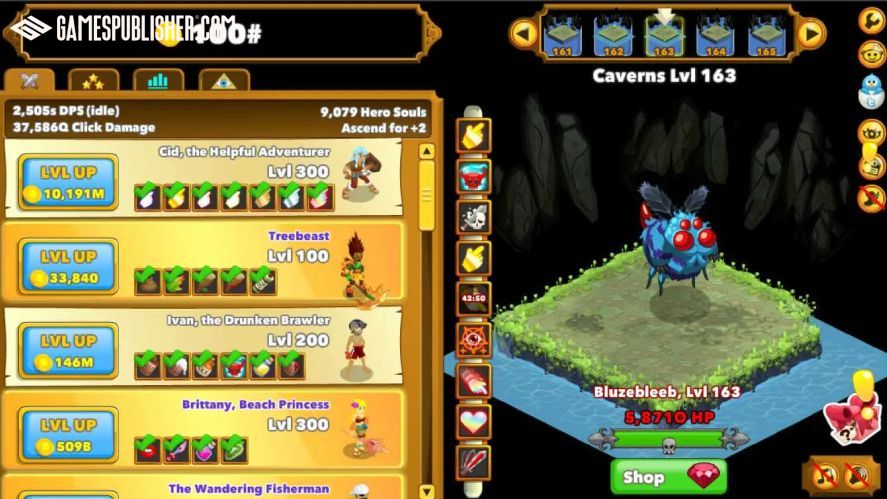
Clicker Heroes has a simple opening loop. You fight monsters, earn gold, recruit heroes, and upgrade them.
As your heroes grow stronger, they handle more of the damage for you. The game also uses ascension, which lets you reset a run and gain Hero Souls for long-term power.
That pattern helped make prestige systems easier for many players to understand.
Clicker Heroes remains useful as a reference point because many newer idle games still use the same broad idea: start simple, automate basic work, reset for permanent power, then reach new milestones faster.
Mr.Mine
- Steam release: September 30, 2020
- Developer and publisher: Playsaurus
- Model: Free-to-play
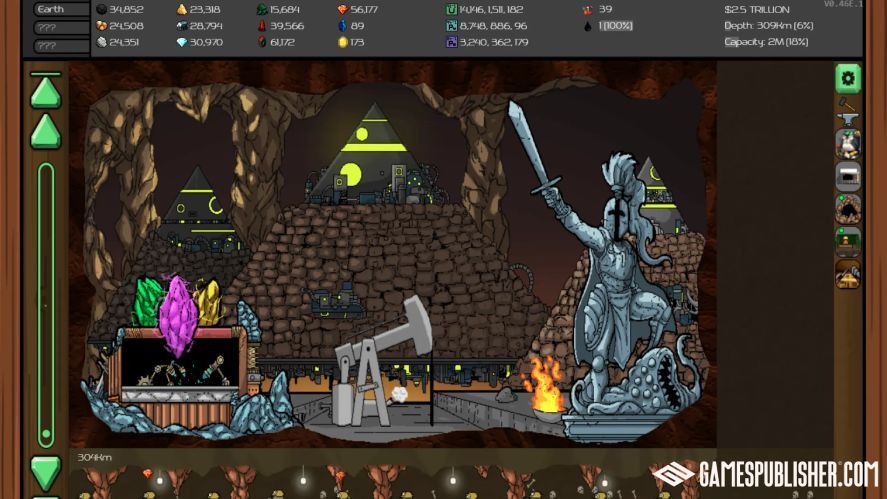
Mr.Mine uses a different theme but keeps the focus on steady progress.
You dig deeper, gather resources, improve your drill, and unlock more systems as the mine expands.
The mining theme gives the player a clear sense of direction. Progress is not only shown through numbers. It is also shown through depth, new areas, upgrades, and discoveries.
This shows how a familiar incremental structure can feel different when the theme and goals change.
Cookie Clicker
- Steam release: September 1, 2021
- Original web release: 2013
- Developer: Orteil, DashNet
- Steam publisher: Playsaurus
Cookie Clicker is one of the best-known examples of the genre, and our guide to the best places to play Cookie Clicker in 2026 compares its main platform options.
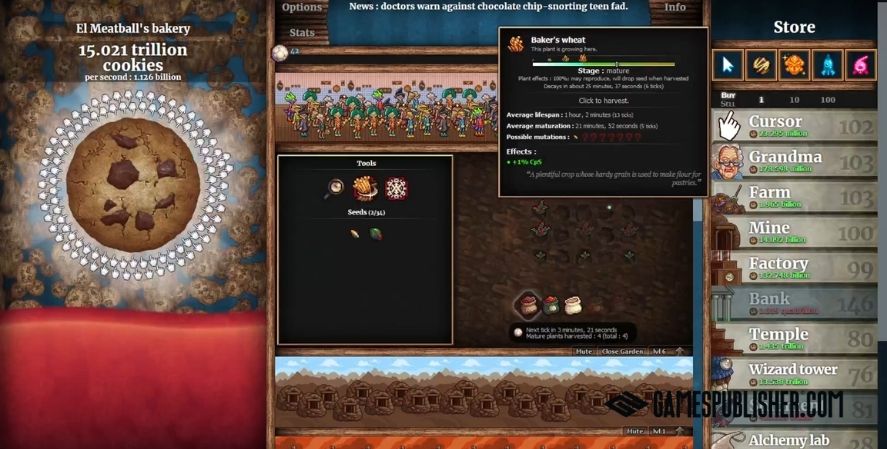
The opening idea in Cookie Clicker is almost absurdly simple: make cookies.
Then the game adds buildings, upgrades, achievements, prestige, mini-games, and many other systems. Over time, the first click becomes a small part of a much larger machine.
Cookie Clicker shows why a simple action can be such a strong starting point. The player understands it at once, while the game saves its deeper systems for later.
Why These Classics Still Matter
Many modern idle games still use a familiar pattern:
Manual action → resources → upgrades → automation → faster growth → reset → repeat
What has changed is everything built around that pattern.
RPG systems add combat and character growth. Desktop games change when and where you play. Factory games add production chains. Strategy games add team builds and trade-offs.
That is why a modern idle games list can include titles that feel very different from one another.
The genre is no longer defined by clicking alone. It is defined more by steady growth, automation, and the way new systems change what the player does.
FAQs About New Idle Games
What are the best new idle games on Steam in 2026?
Orc Incremental and Desktop Detective are two notable 2026 releases. Orc Incremental mixes idle growth with auto-battler strategy, while Desktop Detective combines desktop play with investigation, gear, and ascension.
What is the difference between an idle game and an incremental game?
The terms overlap. Idle games usually allow progress with little or no input for a period of time. Incremental games focus on growth through upgrades, resources, and stronger systems. Many games use both ideas.
Do idle games need to stay open to make progress?
Not always. Some games support offline progress, while others need to stay open or limit what you earn while away. Check the current Steam page or developer notes for each game.
Are there idle games with RPG systems?
Yes. Magic Research 2 is a clear example. It combines incremental progress with spells, combat, crafting, resources, and a team of wizards.
Are premium idle games better than free idle games?
Not automatically. Both models can be good. What matters most is whether the game has fair pacing, useful upgrades, and enjoyable progress without forcing extra spending.
Conclusion: New Idle Games Offer More Ways to Play
New idle games on Steam now cover much more than traditional clickers.
Orc Incremental adds army builds, formations, spells, and rebirths. Desktop Detective turns idle progress into a small desktop RPG. Rusty’s Retirement brings farming to the edge of your screen. Magic Research 2 adds deep RPG systems. Sixty Four builds toward factory automation, while Nodebuster offers a shorter path through rapid upgrades.
Older games such as Clicker Heroes, Mr.Mine, and Cookie Clicker still matter because many of their core ideas remain part of the genre.
For players, this means more choice.
For developers and publishers, it shows how a simple core loop can grow into something much deeper. The key is not only making numbers bigger. It is giving players new goals, better tools, and meaningful reasons to see what comes next.
Loading survey...