
Artificial intelligence is changing how people play and create video games.
Today, many players are asking a new question: what games can you play with AI? From smarter enemies to dynamic worlds, AI is becoming a core part of modern gaming.
For readers of Gamespublisher.com, understanding AI-powered games matters more than ever.
Game developers, indie game publishers, and major video game publishers are all exploring new ways to use AI. These tools help studios design better gameplay, create more content, and build more interactive worlds.
AI now plays several roles in video game genres across the industry. It can control enemies, guide friendly characters, or generate quests and environments.
Some games even allow players to interact directly with AI characters in video games, creating conversations and story moments that feel natural.
At the same time, generative AI in video games is opening new possibilities for game development. Developers can use AI to create dialogue, design levels, or test gameplay systems.
As a result, AI is shaping both how games are played and how they are produced within the wider game publishing ecosystem.
Understanding what games you can play with AI today helps players and industry professionals see how the future of gaming is evolving.
What Games Can You Play With AI
When people ask what games can you play with AI, they are usually referring to games where artificial intelligence controls characters, generates content, or reacts to the player’s actions.
AI has been part of gaming for decades. In many titles, AI controls enemies, teammates, or non-player characters (NPCs).
These systems help manage combat behavior, pathfinding, and decision making inside the game world.
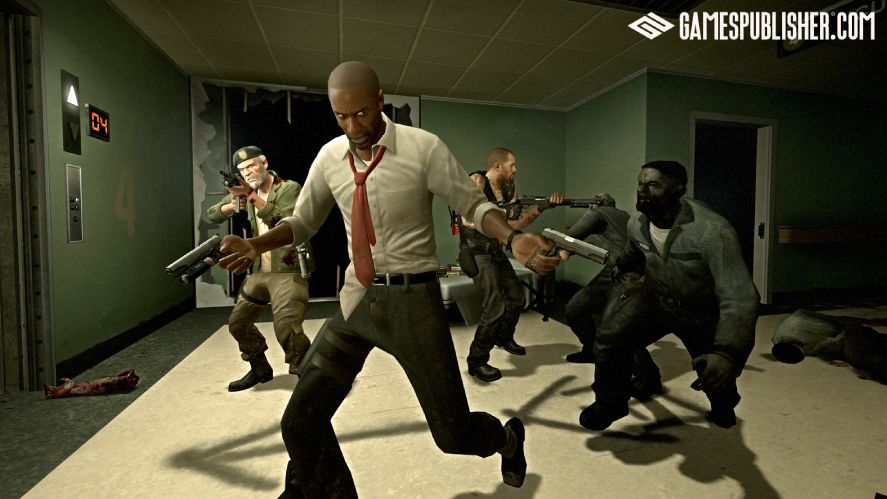
In the past, most games relied on scripted NPC behavior. Developers wrote fixed rules that characters followed during gameplay.
While this worked well, it often made characters feel predictable.
Modern AI in video game development is far more advanced. Many games now use AI to analyze player behavior, adjust difficulty, or generate missions and environments.
Some titles also use generative AI in game development to create dialogue or story events dynamically.
Because of these advances, AI in video games is no longer limited to simple enemy behavior. It now shapes gameplay systems, world design, and even storytelling across many game genres.
How AI Improves Gameplay Experiences
AI helps games feel more dynamic and responsive. Instead of repeating the same actions, AI systems can react to the player and adapt over time.
Common improvements include:
- Adaptive difficulty that adjusts challenges based on player skill
- Smarter NPC behaviors that react to the environment and player choices
- Procedural storytelling where missions or events change each time you play
- Dynamic worlds where characters and environments evolve during gameplay
These systems make games less predictable and more engaging. Players often experience different outcomes even when replaying the same title.
Types of AI in Modern Games
Several types of AI are used in modern game development, each serving different gameplay functions.
Rule-Based AI
This is the most traditional form of AI. To create this, developers create rules that determine how characters behave.
It is commonly used for enemy movement, combat actions, and pathfinding.
Machine Learning AI
Machine learning allows systems to learn from data.
In games, it can analyze player behavior and adjust gameplay elements such as difficulty, pacing, or enemy strategies.
Generative AI
Generative AI is one of the newest technologies in generative AI in video games. It can create dialogue, quests, characters, or environments automatically.
This technology is becoming more common as game developers experiment with AI-assisted design.
What Games Can You Play With AI in Strategy Genres
Strategy games are one of the clearest examples of AI in video games.
Both classic board games and modern real-time strategy titles use AI to test player skill. For many players, competing against intelligent systems is also a way to practice and improve their tactics.
Chess and Board Games Against AI
Chess is one of the most famous examples of AI competition in gaming. Over the years, powerful engines such as Stockfish have transformed how people learn and play the game.
Modern chess AI can analyze millions of possible moves and evaluate complex positions instantly. Because of this, players often use AI engines to study strategies, review matches, and improve their decision making.
Online chess platforms now allow players to compete against AI opponents at different skill levels.

Beginners can practice basic tactics, while advanced players can challenge extremely strong engines that simulate professional-level play.
Other digital board games also use similar AI systems.
Games like checkers, Go, and strategy board simulations rely on artificial intelligence to provide challenging opponents when human players are not available.
Real-Time Strategy Games With AI Opponents
Real-time strategy (RTS) games are another major area where AI plays a key role. In these games, artificial intelligence must handle multiple tasks at the same time while reacting quickly to player actions.
For example, in StarCraft II, AI opponents control bases, gather resources, produce units, and launch attacks. They must balance economy and military strength while adapting to changing battlefield conditions.
Games in the Civilization series also rely on complex AI systems. In these turn-based strategy titles, AI civilizations manage diplomacy, technology research, city development, and military expansion across large maps.

Similarly, games like Age of Empires use AI to simulate rival kingdoms that build armies, explore the map, and develop long-term strategies. Each AI opponent may follow a different play style, creating varied challenges for the player.
These systems show how AI helps strategy games remain engaging. Instead of predictable enemies, players face opponents that can plan, react, and compete in ways that feel much closer to human decision making.
What Games Can You Play With AI in Single Player Video Games
Most single-player titles rely heavily on AI in video games. Without artificial intelligence, these games would feel empty or predictable.
For game developers, strong AI systems are essential in single-player design. Good AI can turn a simple encounter into a memorable challenge. It can also help shape storytelling, exploration, and player choices.
Because of this, AI remains one of the most important tools in AI in video game development, especially for story-driven and immersive games.
RPG Games With Intelligent NPCs
Role-playing games (RPGs) are known for complex worlds filled with characters, quests, and branching stories. In these games, AI controls a wide range of non-player characters and helps create believable interactions.
In The Elder Scrolls series, NPCs follow schedules, react to player actions, and participate in the game world. Some characters travel between towns, run shops, or interact with other NPCs.

Games like The Witcher 3: Wild Hunt also rely on AI to control enemies, townspeople, and wildlife. These systems allow the world to react naturally as players explore villages, forests, and cities.
Similarly, Cyberpunk 2077 uses AI to manage crowds, companions, and enemy combat behavior. AI-driven characters help create a living, futuristic city where events continue to happen around the player.
These systems show how AI characters in video games can improve immersion and make RPG worlds feel believable.
Action and Shooter Games Using Advanced AI
AI is also essential in action and shooter games. In these titles, artificial intelligence controls enemies that must react quickly to the player’s movements and strategies.
For example, the Halo series is well known for its enemy AI. Different alien units behave in unique ways. Some attack aggressively, while others take cover, retreat, or coordinate with teammates.
The classic shooter F.E.A.R. became famous for its advanced enemy behavior. AI soldiers work together, flank the player, and use the environment to gain an advantage. This makes combat encounters feel intense and unpredictable.

Another example is The Last of Us, where enemy AI and companion AI work together to create realistic survival scenarios. Enemies search areas carefully, communicate with each other, and react dynamically to player actions.
These examples show how advanced AI systems help action games feel more realistic. Instead of simple targets, players face enemies that behave strategically and adapt during combat.
What Games Can You Play With AI Chatbots
Conversational AI has introduced a new type of interactive gaming experience.
Instead of fighting enemies or completing missions, players can talk directly with AI characters and influence the direction of the game through dialogue.
These experiences are powered by AI in video games and modern chatbot technology. Players can ask questions, make decisions, and shape stories through natural conversations.
In many cases, the AI responds differently depending on what the player says, creating a unique experience each time.
This approach is becoming more popular as generative AI in games improves.
Developers and game publishers are experimenting with systems that allow players to interact with characters, explore storylines, or even create their own adventures with AI assistance.
Text Adventure Games With AI
Text-based adventure games are one of the most natural ways to use conversational AI. In these games, players describe actions using text, and the AI generates the next part of the story.
Unlike traditional text adventures with fixed paths, AI-driven systems can produce nearly unlimited story variations. The AI can create new locations, characters, and challenges as the player continues the adventure.

Some modern platforms use generative AI in video games to build dynamic storytelling systems. Players might explore fantasy worlds, solve mysteries, or survive in dangerous environments, all generated in real time by AI.
These experiences show how AI in video game development can support storytelling and creativity while giving players more freedom to shape the narrative.
Roleplaying With AI Characters
Another growing trend is roleplaying with AI characters in video games. Instead of following scripted dialogue trees, players can talk freely with characters powered by advanced AI models.
Some platforms allow players to create custom characters or interact with AI personalities based on fictional worlds.
These characters can respond to questions, participate in roleplaying scenarios, and continue conversations over long sessions.
Generative AI also makes it possible to simulate entire worlds. Players may interact with multiple AI characters who remember past events, react to the environment, and help develop evolving storylines.
For game developers and independent game publishers, this technology opens new opportunities for interactive storytelling.
As conversational AI continues to improve, roleplaying games may become far more dynamic than traditional scripted experiences.
What Games Can You Play With AI for Creativity and Sandbox Experiences
Artificial intelligence is also expanding creativity in gaming.
These experiences often appear in sandbox-style game genres, where players have more freedom to shape the world around them.
AI can generate environments, characters, missions, or storylines based on player actions. This makes each playthrough feel different and encourages exploration.
AI Dungeon and Story Generation Games
One of the best-known examples of creative AI gaming is AI Dungeon. This text-based game allows players to explore unlimited stories generated by artificial intelligence.
Instead of selecting from predefined choices, players can type any action or dialogue they want. The AI then continues the story based on that input.

This creates an open-ended adventure where players can explore fantasy worlds, science fiction settings, or completely original scenarios.
Other story generation NPC tools use similar technology built on generative AI in video games. These platforms allow players to build characters, explore custom worlds, and generate quests dynamically.
Because the AI can create new content instantly, these games offer almost infinite replay value. Each session becomes a unique narrative shaped by the player’s imagination.
AI-Powered Sandbox Games
AI is also used to create sandbox experiences where the game world evolves dynamically. In these games, artificial intelligence can generate maps, characters, and missions as players explore.
Procedural world generation is a common example.
AI systems can design terrain, cities, or dungeons without requiring developers to build every location manually. This approach allows for much larger and more varied worlds.

Some games also use AI to create dynamic events or missions. Instead of repeating the same objectives, the game can generate new challenges based on player progress or behavior.
These systems are becoming more common in modern AI in video game development. They help game developers build larger, more dynamic worlds while giving players greater freedom to explore and experiment.
What Games Can You Play With AI for Learning and Skill Development
Artificial intelligence is not only used for entertainment. Many games now use AI in video games to help players improve skills and learn new concepts.
These systems analyze how players interact with the game and adjust challenges to match their ability.
Because of this, AI-powered learning games can provide more personalized experiences. Instead of giving the same challenge to every player, the game adapts based on performance.
This keeps gameplay engaging while helping players develop problem-solving, memory, or strategic thinking skills.
Puzzle and Brain Training Games With AI
Puzzle and brain training games often use AI to adjust difficulty levels automatically. These systems analyze how quickly players solve puzzles, how often they make mistakes, and what strategies they use.
Based on this data, the AI can modify the game experience. For example, puzzles may become more complex if the player performs well, or slightly easier if the player struggles.

This helps maintain a balanced challenge that keeps players motivated.
Many brain training apps and logic games use this adaptive design. Instead of static levels, the difficulty evolves with the player’s progress, making the experience feel more personalized.
This approach shows how AI in video game development can support both fun and skill improvement.
Educational Games Powered by AI
AI is also becoming an important tool in educational games. These titles combine gameplay with structured learning systems that respond to player input.
Some games teach coding and programming concepts through interactive puzzles and AI-driven guidance. Others focus on language learning, where AI systems analyze pronunciation, vocabulary usage, or grammar mistakes.
There are also logic and problem-solving games that provide instant feedback based on player decisions. The AI tracks progress and adjusts future challenges to help players improve gradually.

For independent game publishers and educational platforms, AI-driven learning games represent a growing part of the gaming market.
By combining entertainment with adaptive learning systems, these games show how generative AI in games and intelligent feedback can support both play and education.
The Future of What Games You Can Play With AI
Artificial intelligence is already transforming modern games, but the technology is still evolving. In the coming years, AI will likely play an even bigger role in how games are designed, published, and experienced by players.
One of the biggest changes will be the rise of generative AI in video games.
Instead of relying only on pre-written content, future games may generate dialogue, quests, and entire storylines dynamically. This could allow developers to create worlds that change based on player decisions and play styles.
AI may also reshape game development workflows. Studios can use AI tools to design levels, test gameplay systems, and assist with world building.
For game developers and video game publishers, this could reduce development time while allowing teams to experiment with larger and more dynamic worlds.
AI as a Game Master
One emerging idea is the concept of AI acting as a game master. In tabletop role-playing games, a human game master normally controls the story, characters, and events in the world.
With AI technology, these responsibilities could be handled by intelligent systems. An AI game master could generate quests, control non-player characters, and react to player decisions in real time.
This concept could bring tabletop-style storytelling into digital environments.
For AI in video game development, this approach could open new possibilities for narrative-driven games and collaborative storytelling.
AI-Generated Worlds and Stories
Another key trend is the growth of AI-generated worlds. Many games already use procedural generation to create maps or levels, but AI systems may soon take this much further.
Machine learning can help generate environments, characters, and storylines that feel more natural and less repetitive. Instead of relying on fixed templates, the AI could design content that adapts to the player’s actions.

For example, a game world might generate new towns, quests, or characters based on how players interact with the environment. Stories could evolve over time, allowing players to influence the direction of the narrative.
This approach is becoming an important area of research in generative AI in games. It could shape the future of interactive storytelling across many video game genres.
Conclusion
Artificial intelligence is changing how games are played and created. From strategy games and RPGs to creative sandbox experiences, there are already many examples of what games you can play with AI today.
AI helps create smarter opponents, more responsive worlds, and dynamic storytelling systems. It also gives game developers new tools for building larger and more complex game experiences.
For vodeo game publishers and indie game publishers, these technologies open new opportunities for innovation within game publishing.
As AI in video game development continues to improve, the possibilities for gaming will expand even further. Future games may feature fully generative worlds, intelligent companions, and interactive stories that evolve with every player.
For readers of Gamespublisher.com, exploring AI-driven gaming is an important way to understand where the industry is heading. Artificial intelligence is not just improving gameplay; it is helping shape the next generation of game development and interactive entertainment.
Loading survey...